Source: Večernji list
Nikolina Brnjac, MEP and former Minister of Tourism, speaks about the need for balanced development of destinations, the importance of year-round tourism, and the new opportunities opened up by the European budget for affordable housing.
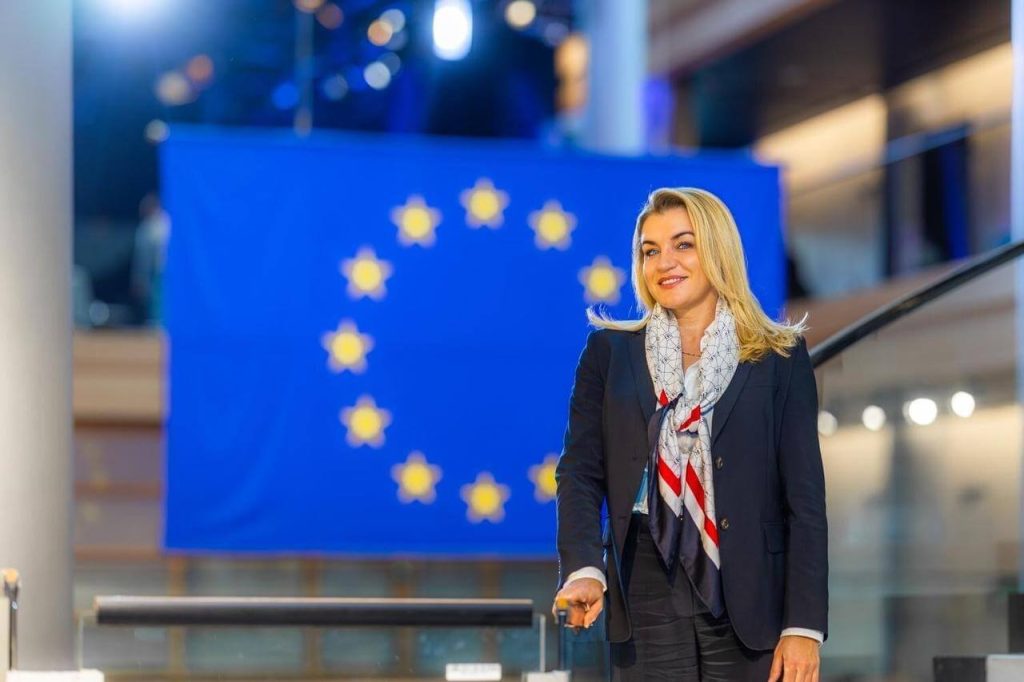
Former Minister of Tourism and Sports, now a Member of the European Parliament from the EPP – HDZ, Nikolina Brnjac carries out her current job with equal energy and enthusiasm. She tells Večernji what she has accomplished in just over a year of her EU mandate, what her current focus is, what she thinks about Croatia’s tourism results and other current events.
Croatian solutions for short-term rental and more sustainable tourism will be the basis of the future EU legislative framework on the subject. How did you manage to push it through?
Well, I wouldn’t really say that it should have been pushed through. There is simply a real need to organize that area, and we in Croatia have done it in a way that is both universally applicable and innovative. This has already been confirmed to us by the relevant institutions dealing with tourism policies, from the World Tourism Organization to the OECD and the European Commission. Namely, the digital age in which we live has flaws, but also great advantages that can be used to make tourism more sustainable. The vast amount of data that is available today can be systematized and analyzed more and faster than ever before and applied in the creation of evidence-based policies. The special value of our Law is that it precisely regulates the development of tourism in the direction of sustainability.
It is also important to point out that the Act also provides incentives for investment in projects that contribute to sustainable tourism, both for public and private tourism infrastructure, which means that it also brings benefits to economic entities, not restrictions. As the EU, especially since this institutional cycle, has placed a strong emphasis on sustainable tourism (and for the first time we have a Commissioner for Sustainable Transport and Tourism), I first presented the Croatian solutions to my colleagues in Parliament, in the Committee on Transport and Tourism, and then to the Tourism Task Force. The Commissioners in the European Commission, Tzitzikostas, who is responsible for tourism, and Jorgensen, who is responsible for housing, also expressed interest in our model. After talking with the Commissioners, I also made detailed presentations to experts in the EC Working Group on Housing and the Commission Directorate-General for Tourism, who recognized the value and applicability of the Croatian solutions.
When could final solutions be expected and in what relation will it be with the legislation of individual member states?
It is difficult to say exactly when we can expect a legislative proposal at EU level. But certainly during this Commission mandate. Since this proposal should contribute to solving the housing crisis, I hope that it will happen as soon as possible. As for the form, in discussions with the relevant Commissioners and services, I expressed the opinion that it is best to regulate this area by means of a directive. Unlike a regulation, a directive sets the objective, and Member States can decide to do so through national legislation. I also stressed the importance of flexibility in the legal solution so that measures at local and regional level can be adopted in accordance with specific needs and priorities, as is also stipulated in the Croatian Tourism Act.
In May next year, the full implementation of the Regulation on the collection and exchange of data on short-term accommodation rental services will begin. It will enable the collection of detailed data from booking platforms. In addition, the Parliament and the Council are negotiating the final form of the Regulation on European Population and Housing Statistics. Once we have organized the collection of all key data sets, we will be able to prescribe their use. This will enable the adoption of evidence-based policies and a more balanced coexistence of tourism and affordable housing.
The consequences of years of apartment building are more or less known for Croatia, how noticeable is this problem in other EU member states?
The problem is particularly pronounced in Spain, France and Italy, mainly in most Mediterranean countries. Many cities are under great pressure, especially some historic centers, which have almost become tourist resorts. In Portugal, for example, the capital Lisbon is in a rather difficult situation. In Barcelona, the situation is dramatic, and the pressure of short-term rentals on the housing stock is also felt in Prague, Rome, Malta, etc. In fact, the vast majority of European tourist destinations have experienced a similar fate. And precisely because the development of tourism was not managed, but was dictated, especially in the part of so-called private renters, by demand via platforms. According to Eurostat, online platforms recorded 155 million overnight stays in short-term accommodation in the last quarter of 2024. This is +17.4% compared to the same period in 2023. The most popular regions were Adriatic Croatia (25.2 million), Andalusia (17.2 million) and Provence-Alpes-Côte d’Azur (15.6 million). Data for the third quarter of this year is not yet available. But the first quarter saw another year-on-year increase.
In many European countries, due to tourist demand, the number of apartments for young people and long-term rentals in general have decreased, which will be the topic of the conference you are organizing in Zagreb on September 26th. Can you present the event and its goals in a little more detail?
The aim of the conference is to bring everyone together. From the construction sector, banks, architects and urban planners to policy makers and various experts involved in construction and housing. The aim is to make the best use of the funds that will be available to us for affordable housing from the European and national budgets. But also to see if there are any specific challenges that Croatia needs to address or good practices that we can present to others. The government has already taken a huge step with the National Housing Policy Plan. The POS Act has been passed, a number of important laws in the field of construction and housing policy are being changed to facilitate the construction and rental of affordable housing units, and they are currently in public consultation, as well as the Affordable Rental Program. By the end of the year, we expect the first law on affordable housing, which Deputy Prime Minister Branko Bačić will tell us more about.
Cities and regions can already use a number of sources of European funds. In the new European budget, which starts in 2028, affordable housing is one of the priorities within the framework of cohesion policy. That is why I am pleased to host Minister Mikuš Žigman and Minister Piletić, who will be responsible for programming European funds for this purpose. Participants will have the opportunity to hear the latest information from the European Commission, the European Investment Bank and the European Bank for Reconstruction and Development, as well as good practices from other European cities, which will be presented by renowned architects. I am very much looking forward to the panel on the role of local and regional authorities in finding solutions. We have interlocutors here from Split, Osijek, Zagreb, Novska and Karlovac counties. It is at the local and regional level that this issue is being specifically addressed. I hope that this conference will serve as additional networking, exchange of experiences and best practices for all participants. Our goal is to make a real shift towards more accessible affordable and sustainable housing in Croatia in the next decade.
One of your initiatives in the European Parliament is the introduction of an award for the best sustainable tourism destinations in the member states. What will be evaluated and when could this be implemented?
Yes, as I have repeatedly said, I believe that sustainability has no alternative. It may initially require additional costs and investments, but it is financially worthwhile in the long run. The effects of sustainable practices on the environment and the lives of local residents need not even be discussed. Therefore, destinations should be encouraged to take this path in every possible way, with concrete incentives. But, perhaps even more importantly, by raising awareness, which can be done with this award. The European Parliament will reward destinations that have successfully implemented innovative management models and evidence-based management practices. The award should encourage excellence in all three dimensions of sustainability. Special emphasis will be placed on effective responses to overtourism, seasonality, climate change and changing tourism trends. The criteria raise awareness of the path to achieving sustainability, and the promotion that the selected destination receives will provide others with insight into how a sustainable destination should be developed. I hope that we will see Croatian destinations among the winners.
Are you satisfied with the implementation of the first Tourism Law, passed during your mandate?
It seems to me that we can be satisfied for now. However, the most important deadlines are yet to come – those relating to the preparation of management plans for the most developed destinations. These management plans are the basis for the development of sustainable destinations, which also includes the basis for the possible adoption of certain restrictions. For example, for new accommodation facilities. That is why I am extremely pleased to organize an event in the European Parliament in October for representatives of tourist boards and county tourism departments. I plan to talk to them about their experiences in implementing the Act, as well as new possibilities for financing sustainable tourism at the European level.
And are you satisfied with the season? The first eight months ended with two percent more guests and 0.5 percent more overnight stays than last year, but, for example, August itself was 0.5 percent lower in arrivals and 1.3 percent lower in overnight stays than last year. It’s hard for the public to get used to minuses during peak hours, what do you say?
Counting tourists does not achieve much. It is important to ensure a shift in quality and value for money. When we embarked on the reform of tourism development management in 2021, we clearly stated that we were not looking for growth in the season, but year-round and more evenly distributed tourism regionally. It is possible that this situation, when apartments are not filled due to excessive supply, will help some landlords to focus on long-term rentals. During my mandate, a record amount of European funds was secured for public and private tourism infrastructure, especially in parts of Croatia that are less developed in terms of tourism.
The largest part of the money is directed towards health and active tourism, which is not dependent on the season. However, I am also very happy to see that we have also helped small and medium-sized entrepreneurs across Croatia. I was recently at the harvest in Ilok and met a wonderful lady there who, with the help of our funds, financed a wonderful little hotel, which is opening soon. So, my focus has not been on numbers before, and it is not now. But on a tourism policy that will enable tourism to contribute to the general economic and social development, but also to the competitiveness of the sector.
The pandemic was one of the biggest challenges of your term, but Croatian tourism was among the first in the Mediterranean to recover, and now the hot topic of price increases is the Adriatic hosts. Are they delivering adequate quality for the price they are asking?
The price must be correlated with the quality, that is clear to everyone. In today’s era, when a large number of people rent accommodation through platforms, the guest will evaluate the “value for money” offered and this will affect your further business. The same applies to catering establishments, which can be reviewed online.