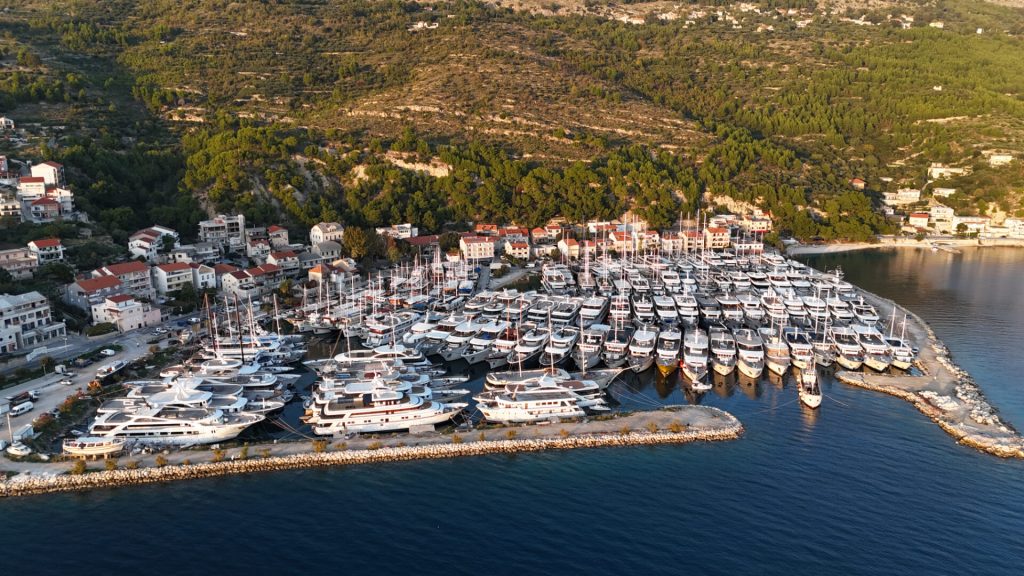
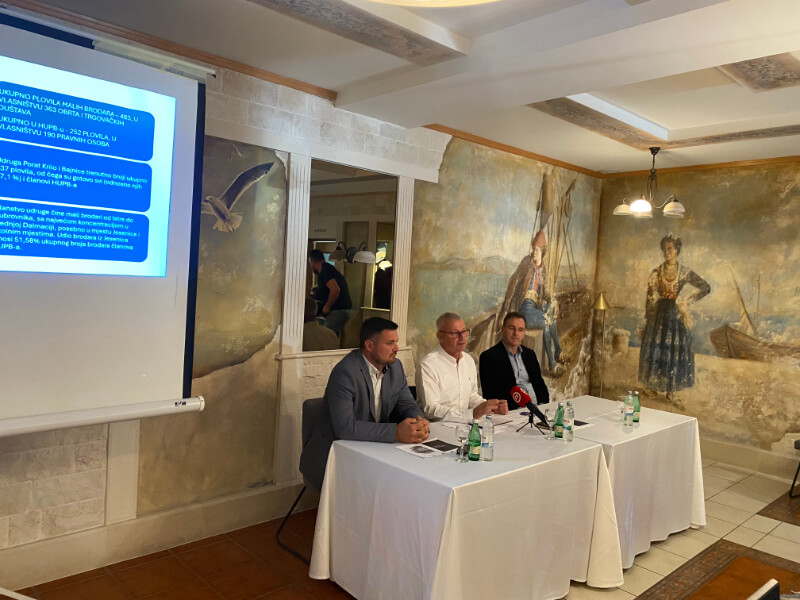
At the press conference of the Croatian Association of Private Shipowners held this Wednesday in Krilo Jesenice, small shipowners presented the results of the tourist season, their socio-economic contribution and challenges, primarily related to the lack of winter and summer berths.
“The development of this branch of tourism began about 20 years ago and was encouraged by a series of strategic documents and programs of the Government of the Republic of Croatia. On the eve of Croatia’s entry into the European Union, the state encouraged the construction of these ships with subsidies for the sake of competitiveness and quality, thus also encouraging domestic shipbuilding. So, we did not emerge spontaneously, but planned and strategic, and developed a product that today gives a strong impetus to nautical tourism and the economy. Unfortunately, this momentum is not accompanied by adequate port infrastructure,” pointed out Arsen Ercegović, president of the Croatian Association of Private Shipowners.
More than 130 thousand guests per season, 95 percent of which are foreign
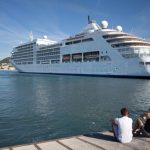
Today, 483 small shipowners’ ships sail in Croatia, of which 252 vessels are members of the Croatian Association of Private Shipowners. The fleet includes small cruisers, yachts with professional crews and excursion boats, and members of the Croatian Association of Private Shipowners employ more than 1,500 employees.
The Association’s membership consists of small shipowners from Istria to Dubrovnik, with the highest concentration in central Dalmatia, especially in the town of Jesenice and surrounding towns. The share of shipowners from Jesenice is 51.58% of the total number of shipowners who are members of the HUPB.
Almost 95 percent of the more than 130 thousand guests per season come from abroad, while the total annual gross income of all small shipowners is more than 300 million euros per year, of which the gross income of members of the Croatian Association of Private Shipowners is almost 200 million euros. Small shipowners pay more than 50 million euros annually for taxes and contributions alone.
These figures clearly show that they have successfully capitalized on the growing demand for nautical tourism and multi-day cruises, further strengthening their position in the Croatian tourism offer. In addition, small shipowners in Croatia play a key role in the economic chain, cooperating with different sectors and generating a significant contribution to local communities, which makes them a driver of the economy and job preservation.
Lack of summer and winter berths – one of the biggest challenges for small shipowners
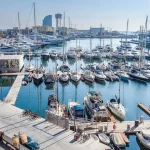
Small shipowners face numerous challenges that make their daily business and long-term development difficult. The lack of adequate summer and winter berths is one of the biggest problems. During the summer season, when the demand for berths is at its peak, small shipowners often do not have access to sufficient capacity. In winter, however, the limited number of available berths further complicates the accommodation of ships and their maintenance. In addition, delays in the implementation of key infrastructure projects, such as the planned construction of a new port in Krilo Jesenice, seriously limit business, but also the quality of services that small shipowners can provide. Additional uncertainty is provided by the announced reconstruction and extension of the wharf of St. Petra in the City Port of Split, which will make it more difficult for guests to receive and disembark, as well as the implementation of pre-sold arrangements.
Another challenge for small shippers is unclear legal regulations. Complex administrative procedures, lengthy procedures for issuing permits and the lack of specific legal regulations for this sector often create additional costs and bureaucratic obstacles.
“We have developed a top tourist product, which has no supporting infrastructure. It is time to move more decisively into the construction of new ports, to enable us to operate normally and develop. Dialogue is the key to accelerating the resolution of challenges in the small shipping sector. We offer partnership and cooperation in finding these solutions. “Establishing working groups in cooperation with the Ministry of the Sea, Transport and Infrastructure, the Ministry of Tourism and Sports and regional and local self-government will enable faster resolution of key problems and a better understanding of the specific needs of this sector,” stressed Arsen Ercegović.