The motives of people who, as foreign workers, decide to seek a better life on the other side of the world are different. But they certainly have one thing in common – making the difficult decision to find a better life far from everything that is close and familiar to them.
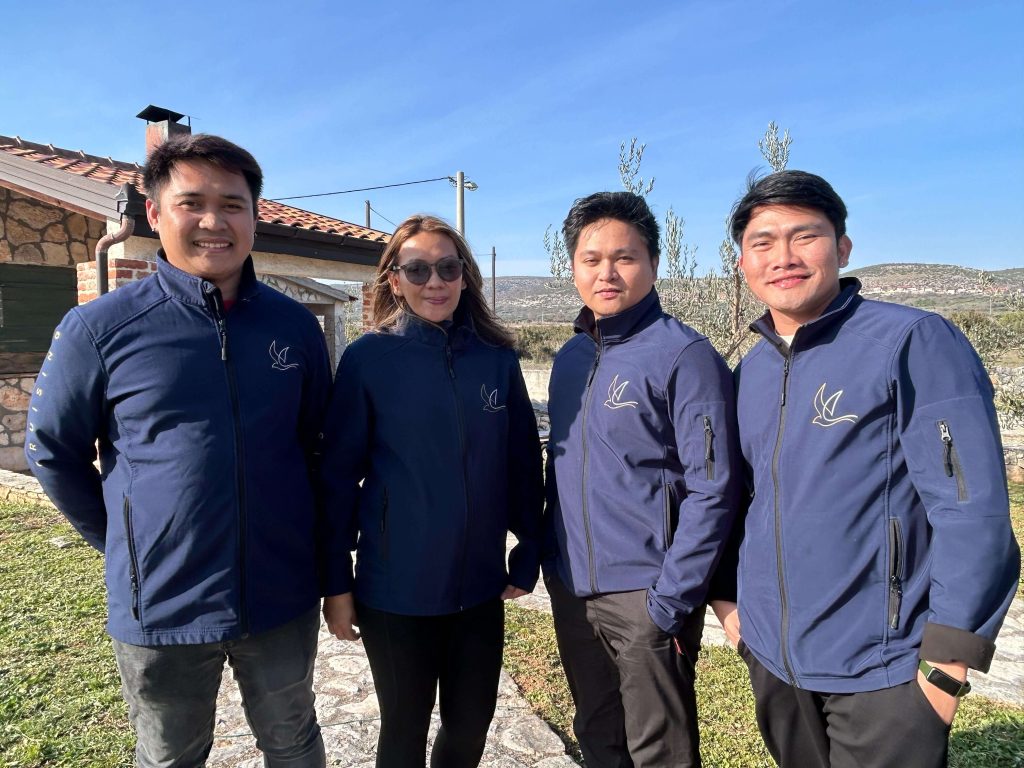
For Wranle Josef Palas, Jemarkpoe Lopina, Kris Patrick Marron and his wife Evelyn from the Philippines, Croatia represents a new beginning and a chance for a better life. They are all members of the crew of Murter’s Lastavica Cruising, which they say is the best employer they have ever had. And not only in their native Philippines, but also on other continents. Lastavica Cruising is a family-owned company that has been in business for almost 20 years. The combination of experience and wisdom provided the realization that the real Lastavica Cruising experience depends on the brand ambassadors, a well-coordinated crew. It is they who determine the overall impression that the guests will create, take with them, and spread further.
Why Croatia?
Most of our interviewees have already traveled the world working in various locations from Japan to the Middle East. But for Wranle Josef Palas, Croatia will always be his first love, he says. – After graduating from college in the Philippines, unfortunately, I was not offered any significant business opportunities. When I heard about Croatia from a friend, I thoroughly researched everything that was available. “I decided that I could do very well here,” young Wranle tells us. He is looking forward to his first nautical season, which he will spend as a waiter on a mini-cruiser. By the way, Wranle has a university degree in hospitality. He plans to build his career in tourism, and he believes his new job is the best start he could have imagined.
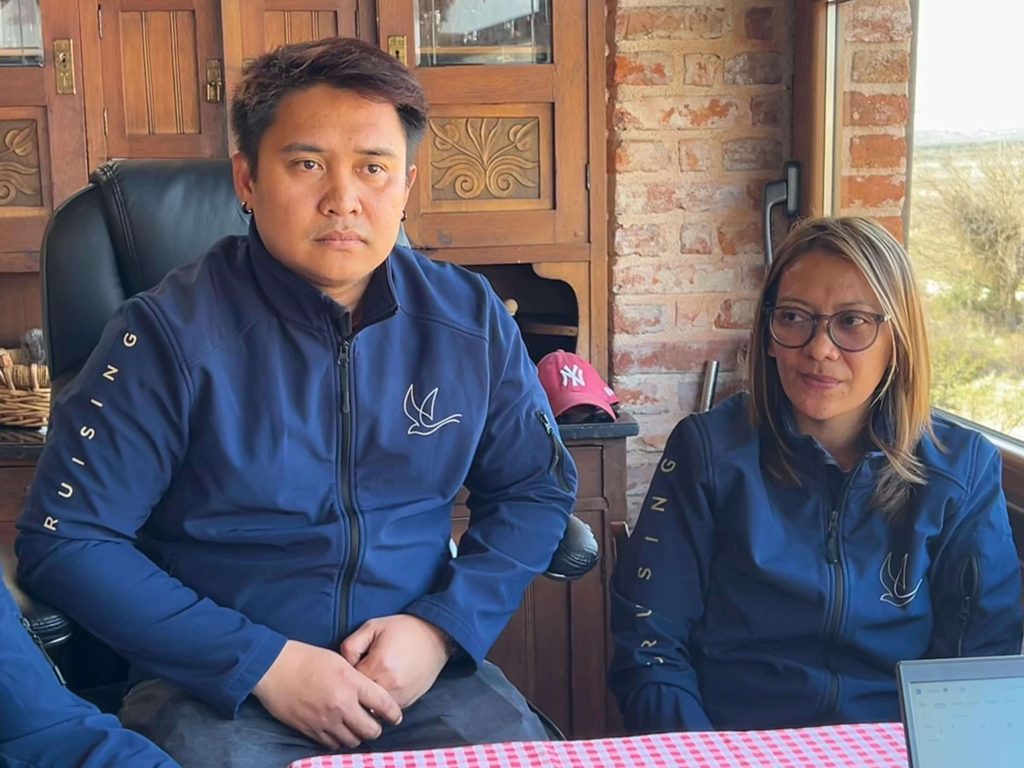
Kris Patrick Marron came to Croatia to work as an assistant cook on a ship. However, before him, his wife Evelyn worked for several seasons on the Adriatic. She, on the other hand, works as a masseuse and maid. – I had the opportunity to work for a while in the Middle East. I have to admit that I find it much more pleasant and enjoyable to work in Croatia. People here are very kind, says Evelyn, who finds separation from her children difficult. In the Philippines, they left their two children in the care of Kris’ mother, an elementary school teacher.
– Leaving the children was difficult, but we know we are working for their future. “Kris’s mother takes very good care of our children,” says Evelyn. Kris, on the other hand, adds: – We didn’t make the decision to both go work abroad easily. There aren’t many job opportunities in the Philippines. Croatia is a safe country, which, along with the fact that it is predominantly Catholic, was also an important factor in making the decision. They both hope to soon be able to bring their children to Croatia and apply for citizenship. – This is the place where we want to raise them, they both say.
Religion and language
Comparing Croatia and the Philippines, our interlocutors, mostly with university education, emphasized that Croatia is safe. And its people are warm and kind. This is their experience with employers, who they say have accepted them as family members from the very beginning.
The Philippines is an island country in Southeast Asia, located in the western Pacific Ocean, and consists of over 7,600 islands. Most of the islands are uninhabited, and on the main islands of Luzon, Visayas, and Mindanao, a rich culture has developed, bringing together about 115 million people. The Philippines’ economy is largely service-oriented, and the country is known for its beautiful beaches, active volcanoes, and rich mineral resources. The dominant religion is Roman Catholic, so the integration of Filipinos into our society is even simpler and easier.
Jemarkpoe Lopina has traveled a good part of the globe. He has worked from Japan to the Middle East, and since working in Croatia, he has been visiting other European countries in his free time. In this way, he tells us, he rewards himself after a season spent as a waiter. – There are not many differences between Croatians and Filipinos. The people are very similar, hospitable. What is different is the food, and the climate suits us very well, says Jemarkpoe. This hospitality is key to the integration of Filipinos, but also people of other nationalities who have come to work in Croatia.
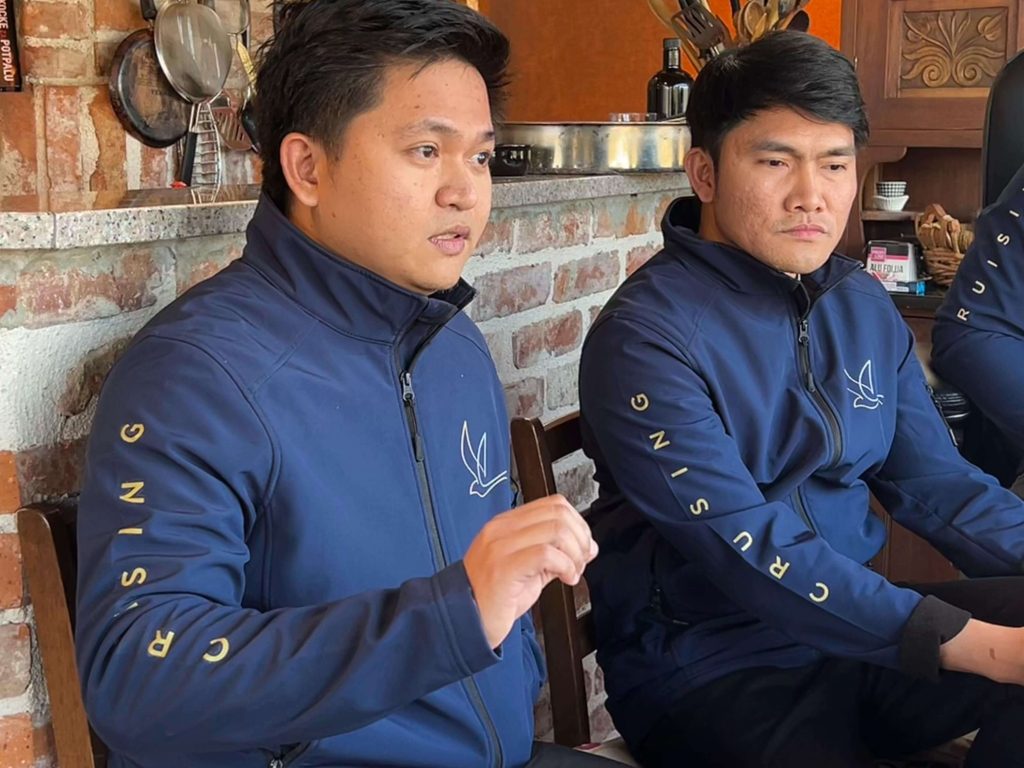
The language barrier is perhaps the biggest, but the fact that most Croatians generally use English very well also facilitates the process of adaptation and faster integration into social and business processes. However, our skillful and hardworking interlocutors already have their favorite Croatian words. For young Wranle it’s the phrase ‘Good job!’, Jemarkpoe likes to hear ‘Cheers!’, and Kris ‘go easy’. Evelyn noticed that Croatians like to greet each other, so she quickly adopted all the greetings. She said to us both ‘Good morning!’ and ‘Goodbye!’ in fluent Croatian.
Towards the season
While some are looking forward to the unknown because their first tourist season on a boat in the Adriatic is yet to come, others are looking forward to the already familiar ports and beautiful bays.

Irena and Igor Stančić are most looking forward to the new season. They are very happy with their crew, whom they truly see as one big extended family. – We have always worked the same way and have the same approach towards people. We try to make every crew member feel like they are part of an extended family. We are happy that our step towards foreign workers has paid off and that such good and hardworking people have found us, the Stančićs tell us. Our domestic crew members, who have maintained quality and a high level of service for many years, are a role model for foreign workers. Every year, guests come to the Adriatic from all over the world to spend their vacation and have a special experience of staying in our country on their ships.