Source: HRT
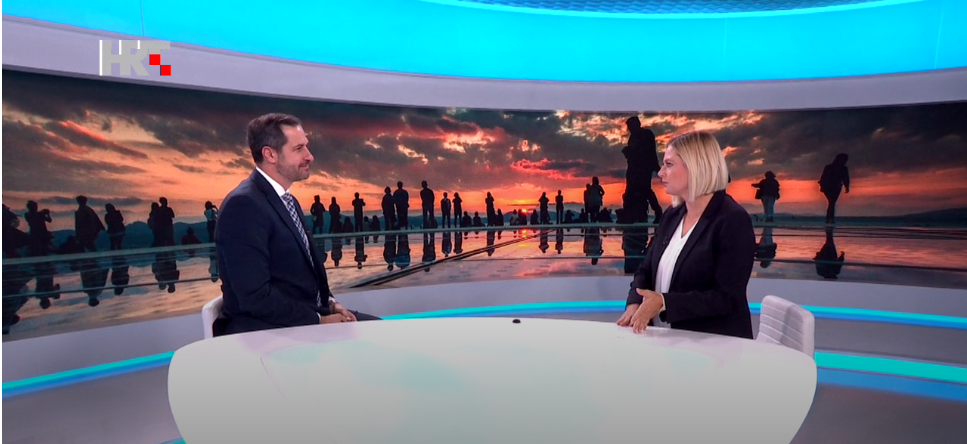
The guest of yesterday’s HRT Dnevnik was the Minister of Tourism and Sports Tonči Glavina, who spoke about the results of Croatian tourism, the challenges of the season, and plans for the coming year.
At the beginning of the conversation, the minister expressed satisfaction with the data on the pre-season and post-season.
He said that he believes that strategic frameworks and legal measures have resulted in a “record year in tourist traffic and income”.
– For the first time in our history, growth was not generated in the two summer months. This is one of the basic strategic goals – to reduce high seasonality and grow in the pre-season and post-season, said Glavina, adding that results above five percent growth were achieved in September, making this September the best in the history of Croatian tourism, significantly better than last year’s record, he said.
When asked whether trends in tourism are changing due to strategy or due to price increases during the season, the minister clarified.
“If prices were the only issue or the only cause, then we would be seeing some kind of trend all year long. I believe it’s a result of several different things, and prices are just one part,” he said.
Price competitiveness
He added that price competitiveness is “one of the main elements of choosing a destination throughout the year.”
– We are heading in the right direction, developing year-round tourism, said the minister.
We are developing year-round tourism
Speaking about the events that have marked and will mark September and October, Glavina stated that they will generate up to 100,000 new overnight stays during this period.
All these events, as he pointed out, are amply financed from the budget and funds of the Croatian Tourist Board.
The Minister then commented on the challenges of seasonality.
“We can’t do tourism for two or three months and try to live off it all year round. Competition is serious, trends are changing, and many new destinations are emerging,” he said.
He then referred to the legal changes related to short-term rentals in apartment buildings.
– We had to make a significant step forward here, precisely to protect all those who are involved in tourism, so that they can continue to do so. Because we had a trend of around 25,000 new beds every year around August 15, he said.
He added that this year is the first time in history that the number of beds has decreased.
– This year is the first time in our history that we do not have 25,000 more beds, but we have as many as 2,400 fewer beds, he said.
He stated that the capacity reduction is a positive development.
– We are reaching the point where one of our weaknesses, conditionally speaking, is the structure of accommodation capacities, we have significantly influenced it and that is very good and desirable.
He explained what the reduction in beds means for occupancy.
– If we have reduced the number of capacities, and our tourist traffic is roughly at the same level as last year, we will probably have some slight increase in occupancy, which was one of our goals, said the minister.
The importance of further reforms
He stressed the importance of further reforms.
– We have no choice but to vigorously implement reforms. We are doing this for the sake of our tourism future. We are doing this so that we can maintain the competitiveness we have today, so that we can maintain the profitability we have today. But there is no status quo in tourism, he said.
Finally, the minister presented the main message for the coming year.
– The main message for next year is price competitiveness. Guests choose a destination solely based on price, he said.
He concluded with an appeal.
– The appeal to the entire tourism sector is first to come out with strong, good package deals in the fall, where we immediately position ourselves in terms of price, where we will create a good wave of positive bookings and reservations. Also, to make an effort to raise the level of standards and quality, he said.