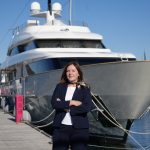
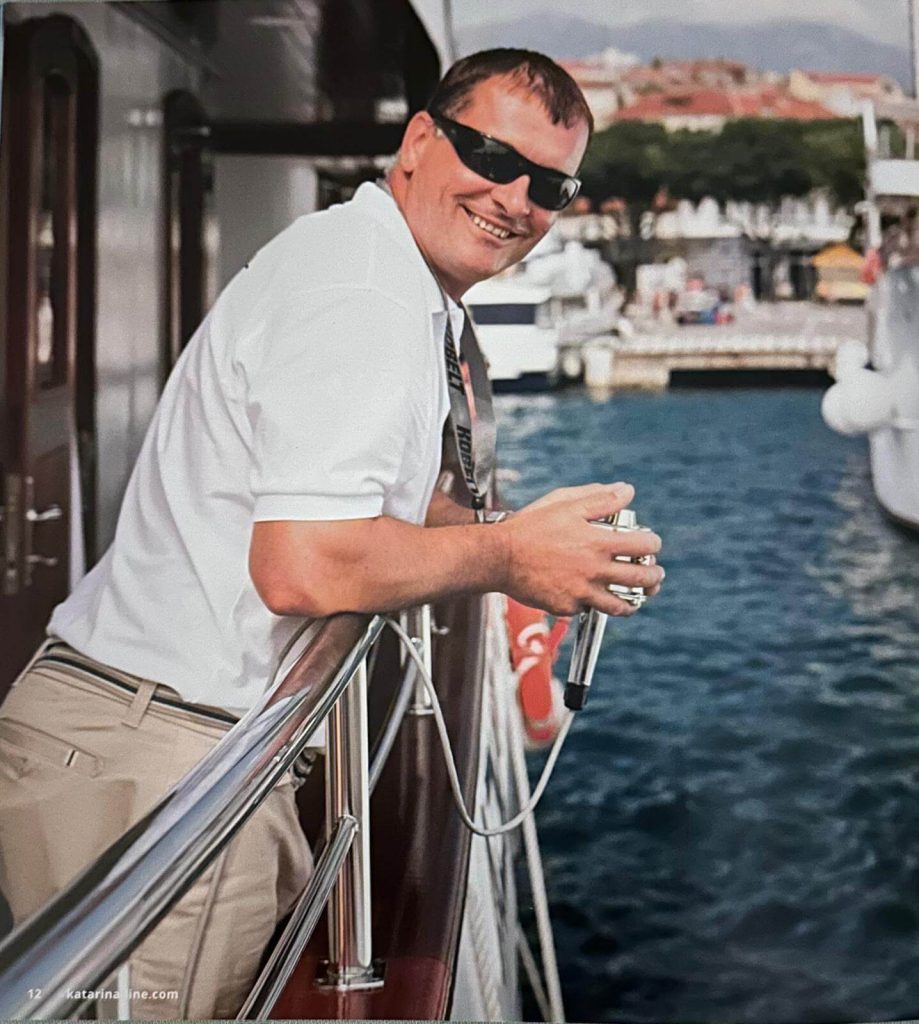
This month, the Croatian Association of Private Shipowners (HUPB) got a new president. Ivan Mladin is a shipowner from Krilo Jesenice with almost 30 years of experience. Although his father was not a shipowner, Mladin continued the old family tradition of his grandfather, and his son is already involved in the family business. He offers two ships, the Admiral and the Aquamarin, he is a long-standing member of the HUPB Board of Directors and is more than familiar with the work of the Association and all the challenges that shipowners face in their business.
The history of shipping in Krilo Jesenice
Can you briefly tell us the history of Krilo Jesenice shipowners and how it came about that so many people from such a small area decided to engage in this business?
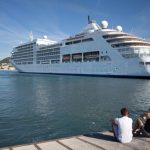
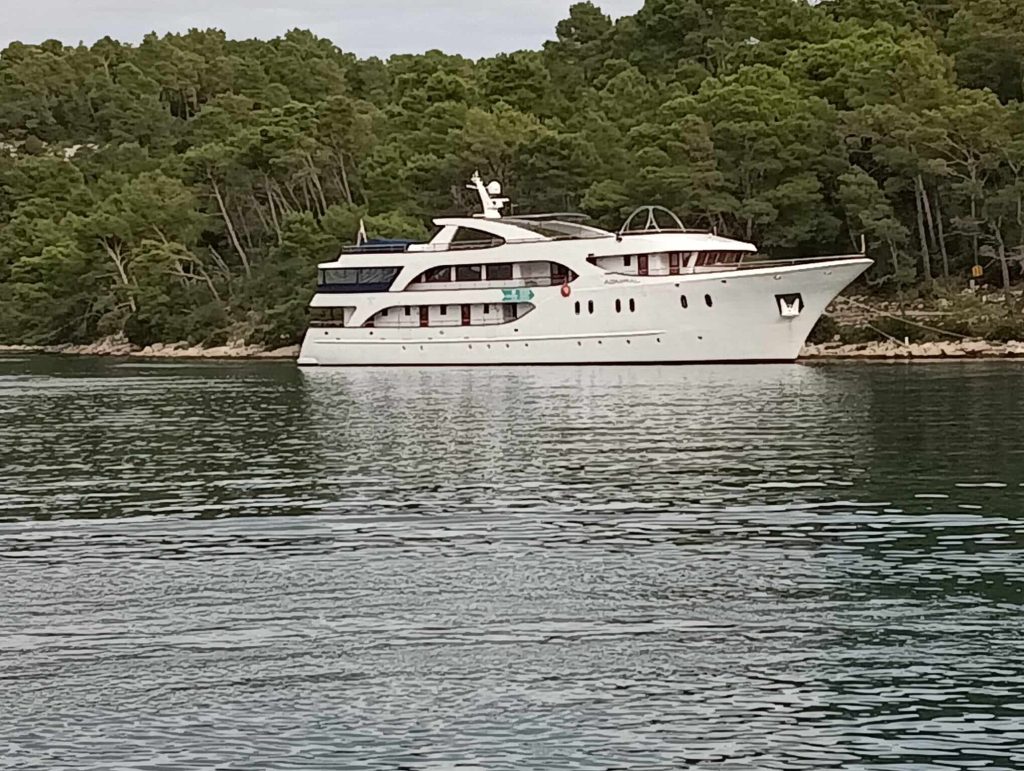
Our town has a rich and more than 150-year-long tradition of shipping. Our ancestors were transporting wine to Trieste by ship back in the 19th century. Jesenice is were rich in vineyards until they were ravaged by downy mildew, a grapevine disease, at the beginning of the 20th century. The period after that was marked by ships for extracting sand from the sea, which was used in construction, and at the end of the 20th century we slowly turned to tourism and started taking tourists on day trips. In the early 2000s, we experienced our greatest boom when most of our fleet of modern mini-cruisers with an average length of 50 meters were built. These are actually floating hotels with 18 rooms and a capacity of 36 passengers intended for seven-day cruises on the Adriatic. The port in Krilo Jesenice is currently the port with the most mini-cruisers in the entire Adriatic. We expect that the competent Port Authority will very soon begin reconstruction in order to turn our port into a port worthy of the modern and beautiful ships that are moored there.
This is the glorious heritage of shipping in Jesenice. Unfortunately, we have not yet presented this old and proud tradition in a worthy way to our homeland or to the world. Now is the time for it, because our dear fathers and grandfathers will not be with us forever, and they still have so much to tell and show. They gave their entire lives to their ships and their families, creating a tradition and a story that is unique in the whole world and deserves to be shown in the best light. We, who take over and continue their heritage, owe it to them and to ourselves to enable the whole world to see our pride and our efforts. The life of a shipowner and seafarer seems glamorous and easy to others, but only we know how much work and sacrifice that life entails.
This is not just a story about ships, but about people, shipowners, seafarers and their families. It is a specific family business that has always included grandfather, grandmother, father, mother and children. Of course, it is a story about generations of our people, because ships have always been inherited from father to son. People lived on ships and from ships, and learned to sail and work from a young age.
Finally, we would like to mention that our ships formed the backbone of the historic convoy to Dubrovnik during the Homeland War, about which there are recordings in the HRT archive.
What are your main goals that you plan to achieve while you are at the helm of the HUPB?
My goals are the same as the goals of previous presidents, and that is to fight for the rights and interests of tourist shipowners throughout the Adriatic. This is a long-term and ongoing process of improving the operating conditions of our tourist shipowners.
The biggest challenges
What do you consider to be the biggest challenge for private shipowners in Croatia today?
We currently have two major challenges that we are facing in our business.
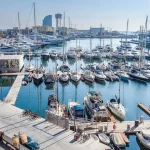
The first is ensuring a long-term solution for suitable and safe winter berths for our ships. Our home port, Krilo Jesenice, is key to this. We have been waiting for the development and reconstruction by the Port Authority of Split-Dalmatia County for many years. Last year, the aforementioned port authority finally obtained a building permit and announced the imminent start of work, but this has not yet happened. This port is of vital importance to us because the majority of our fleet is berthed there during the winter.
The second challenge is to find an adequate solution to the problem of the announced loss of berths for our ships in the Port of Split for the next two tourist seasons. Namely, the Port Authority of Split has announced the reconstruction of the Port of Split, which should last two years. Now all that remains for us is to find suitable replacement ports in which to transfer guests and supply ships. However, this is extremely difficult because the Port of Split is not only the largest port. The city itself is a destination that our guests definitely want to see and visit. The Management of the Association is now working intensively to find an appropriate solution to this major problem as soon as possible, which has the potential to jeopardize the entire business of tourist shipping companies.
How do you assess the current situation in the private shipping sector in Croatia?
The current situation is good because the past season was very good. There were no spectacular record-breaking occupancy rates. We can say that a kind of stabilization has occurred and we are moving towards increasing sustainability of our tourism industry. There is no longer any large-scale construction of new ships, both due to the limited number of berths in ports and due to new regulations that need to be met. That is why the focus is now on improving and preserving existing ships.
Shipowners cooperate excellently with state and local institutions
How do you assess the cooperation between the Croatian Association of Private Shipowners and state institutions, as well as local communities?
Our Association has been cultivating successful cooperation with the competent Ministry of the Sea, Transport and Infrastructure for decades. We have regular annual meetings where we discuss all the problems that concern us. The Ministry is responsible for all state port authorities and regulations that concern us shipowners. We must also highlight the excellent cooperation with the port authorities of Dubrovnik and Split. Their representatives are always ready to listen to us and jointly find the best solutions for mooring our ships in these ports. There is also excellent cooperation with the Port Authority of Korčula and the Dubrovnik County Port Authority. We also cooperate very well with the Port Authority of Split-Dalmatia County, which manages the ports in our county. Among them, we especially highlight the port of Hvar, which is an excellent partner for us. Finally, I would like to highlight the excellent cooperation we have with the Croatian Register of Shipping (HRB). At regular annual meetings, we discuss all important topics and regulations.
What specific measures do you propose to facilitate the business of private shipowners?
As I have already said, our main problem is the lack of berths for our ships. Therefore, the best measures that would facilitate our business are the expansion and development of ports in which sufficient adequate berths for our ships should be provided.
Sustainable business and active membership
How ready are private shipowners to respond to global trends in sustainable business and green energy?
I have already mentioned that the former huge growth in the number of our ships has been stopped and that we are turning to sustainable business and the improvement and preservation of existing ships. We are very aware of the need to preserve our environment and the clean sea that we have, which is our most valuable resource that attracts our guests.
What do you expect from the members of the Association? How can they be involved in making important decisions?
Since its foundation, more than 30 years ago, our Association has fostered democracy and all members of the Association have always had the right to vote. Both at the Assembly when electing the Association’s bodies, and otherwise. Each member can send their suggestions or challenges they face to the Association’s e-mail address, and the Association’s Management will consider them and of course try to resolve them positively as soon as possible.