Source: Novi list Author: Alenka Juričić Bukarica
If the issue of concessions is not resolved in time, the consequences will not only be felt by the marinas, but also by the destination as a whole, since the marina leaves the first and last impression on the nautical guest.
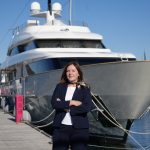
Nautical tourism is at a time of strong global changes. Competition is growing, technology is advancing by leaps and bounds, and guests are becoming more demanding than ever before. Renata Marević, the newly elected president of the Croatian Chamber of Commerce’s Nautical Tourism Association and the Croatian Chamber of Commerce’s Marinas Group, pointed out at the beginning of the conversation that Croatia has all the prerequisites for a leading role in this process, but this will only be possible with a stable regulatory framework, especially when it comes to extending concessions, and with sustained investments in digitalization, safety, sustainability and people.
UNEQUAL GROWTH
What are the most important highlights of this nautical year?
– Nautical 2025 in Croatia was a year of stable but uneven growth. Marinas achieved good results, with a certain increase in physical and financial indicators, mostly in line with plans, and with a high level of guest satisfaction. Some observed a slight decline in transit overnight stays, mainly as a result of the upheaval in the charter sector, but such developments did not undermine the overall stability of the business. What is clearly visible is that the demand for quality berths and a safe environment continues to grow, and guests increasingly value professional processes, team availability, technological standards and the overall experience in the marina.
However, behind this positive picture lies a reality that worries an increasing number of concessionaires, namely the fact that most Croatian marinas are entering the final cycle of concession contracts. Since many marinas have their terms expiring in five to six years, they find themselves in a situation where long-term planning is extremely difficult. Although this period sounds long enough, in the world of marinas it is actually extremely short, because any serious investment – whether in the reconstruction of piers, the modernization of energy systems, digital platforms or safety equipment – has a multi-year investment horizon.
Due to the lack of legal certainty, some investments have already had to be postponed or reduced, creating a kind of development vacuum. If the issue of concessions is not resolved in time, the consequences will not only be felt by the marinas, but also by the destination as a whole, since the marina makes the first and last impression on the nautical guest, but also represents a key infrastructure that enables the distribution of tourist traffic along the entire coast.
In parallel, the charter sector has faced a much more challenging environment this year. While demand, especially in the luxury segment, remains solid, the market is burdened by structural imbalances. Fleets in Europe and Croatia have grown faster than demand in recent years, and competition in the Mediterranean has become extremely intense. Guests are booking later than ever, comparing a greater number of options and have extremely high expectations in terms of flexibility, transparency, security and a personalized approach. In Croatian charter, the mid-range segment of the offer is particularly challenging, facing high operating costs, an increased supply of vessels and strong pressure on prices. This requires operators to modernize their reservation systems faster than ever, improve customer support and invest in crew training, because the guest experience is largely created on board.
Additionally, the entire sector is facing staffing problems, a lack of professional workforce that can authentically present the destination, ensure navigation safety, and provide an experience.
In this environment, it becomes clear how interconnected the marina and the charter are and how important their coordinated action is. The guest does not perceive these two segments as separate entities; for him, the marina is the starting and ending point of the trip, a place where he wants security and a simple process, while from the charter operator he expects professionalism, reliability of the vessel and excellent support during the voyage. Any deviation in one segment undermines the value of the other.
SAFE DESTINATION
Expectations for nautical 2026?
– The entry into the 2026 season brings some optimism as demand for Croatia as a safe and attractive nautical destination remains high. However, the sector is in a very sensitive position. Uncertainty about the duration of concessions directly affects the willingness of marinas to invest in infrastructure, innovation and service development. At the same time, competition in the environment has never been stronger. Italy is implementing an extremely ambitious investment cycle in new and modernized marinas, Greece and Turkey are working intensively on expanding capacity and improving the quality of service; countries in the Eastern Mediterranean and the Middle East are introducing nautical concepts that combine luxury, sustainability and cutting-edge technology.
Global trends are clearly pointing towards the “marina of the future” being no longer just a safe berth with good infrastructure, but a digitally managed system that measures resource consumption, communicates with the vessel owner in real time, analyzes risks, takes care of the ecological footprint and at the same time offers the guest a fast, intuitive and personalized experience. Croatia has great potential to be among the leaders of such a model, but only with a stable regulatory framework and continuity of investment. In addition, it is important to note that the sudden increase in service prices can disrupt the delicate balance of demand, especially in the segment of long-term users. Croatia must develop towards quality, but this growth must be responsible and thoughtful.

Can it be said that the Mediterranean is the most desirable luxury nautical destination globally?
– While the Mediterranean continues to be considered a prestigious global stage for luxury yachting – thanks to its indentation, climate, gastronomy and cultural heritage – numerous nautical markets outside Europe are developing at an extraordinary pace. Australia and New Zealand are creating completely new standards of sustainability, the United States and Canada are investing in new generation smart marinas, while the Caribbean and Middle Eastern countries are strongly diversifying their offer and attracting high-spending guests.
We are following the latest growth in the Asian market. China, Japan and Southeast Asian countries are investing in modern infrastructure, technologically advanced marinas and sophisticated services. This is confirmed by the decision to hold the next ICOMIA World Marina Conference in 2027 in Shanghai, a city that is becoming the center of future global trends. In such a context, it is clear that the Mediterranean – and Croatia in it – must maintain the pace of development in order to remain relevant and desirable.
SUSTAINABILITY AND TECHNOLOGY
In what direction is nautical development towards sustainability?
– The ICOMIA World Marina Conference in Venice was dominated by topics that will shape the industry globally over the next ten years: energy efficiency, advanced resource management systems, infrastructure optimization, water recycling, waste treatment systems, and safety standards in an era of increasing vessel digitalization. There was also a strong emphasis on alternative forms of propulsion – electric, hybrid, hydrogen, and other systems – that are gradually changing the way marinas plan infrastructure and energy consumption.
Croatia presented its experience and expertise in Venice and thereby confirmed that it is a reliable nautical destination with professional staff and high levels of safety. But at the same time, global trends show that destinations that have the courage and capacity to quickly invest in new technology and adapt to changes will have an advantage. Croatia can do that, but only if it has a predictable legal framework.
How much does technology shape the sailing experience?
– In the last few years, technology has transformed the way marinas are managed. Changes are accelerating, both in business and in the habits and expectations of our guests. Today, we are talking about systems that control energy and water consumption, recognize non-compliant conditions on vessels or infrastructure, monitor weather conditions, vessel condition in real time, detect fires at an early stage and enable preventive action. AI models can help in resource planning, risk assessment, increase safety and optimize operations.
Guests, on the other hand, expect simplicity and speed – from digital check-in and automatic berth booking, to personalized notifications and integrated applications that allow them to have all their services in one place. In this sense, a “smart marina” will no longer be an added value, but a basic standard of modern business. However, no marina can seriously invest in such systems without the certainty that the investment will be able to amortize within a reasonable period, which brings us back to the issue of concessions as a key prerequisite for development.
LUXURY AND AUTHENTICITY
What does luxury mean in the world of nautical tourism today, and how much does the authenticity of a destination and its offer matter, and how does Croatia stand on this issue?
– Today’s concept of luxury is less and less associated with exclusively material aspects, and more and more with the quality of the experience. Guests want privacy, security, a personalized approach, a connection with the local community and the feeling that they are contributing to the preservation of the space in which they are staying. Croatia, with its authentic coastline, local communities, tradition and high-quality and unique gastronomy, has a strong foundation for this type of experience. However, in order to remain among the most desirable destinations, it is crucial to ensure responsible management of the space, stable investment conditions and the development of professional staff who can meet the expectations of premium guests.
The transformation of marinas from technical port facilities into complete centers of stay at sea is increasingly pronounced. Instead of offering only safe berthing and basic services, an increasing number of marinas are developing resort-like environments, with hotel and gastronomic facilities, wellness and spa zones, recreational areas and pleasant spaces for socializing and relaxation. The marina is no longer just a place where a sailor will get everything he needs for his vessel, but also a space where he finds what he needs personally – a place where he wants to spend time.
In such a business model, international certificates such as Golden Anchor and Clean Marina become especially important, as they confirm that the marina consistently meets the strict criteria of safety, sustainability and professional management.
Nautical tourism, especially when it includes quality charter, a wide range of services and sustainable technology, brings high added value to the destination. The crucial thing is not to increase capacity, but to invest in standards, processes, knowledge and technology that ensure long-term satisfaction and trust of guests.
The profile of the modern yachtsman is also specific, he is not necessarily a “luxury guest” in the classic sense, but he sees sailing as his lifestyle and is ready to invest in safety, reliability and an authentic experience of the sea, both as a boat owner and when renting a vessel on charter. His consumption is usually thoughtful and focused on quality – whether it is about security solutions, gastronomy, accompanying services or, of course, external luxury. However, the premium experience is not determined solely by the level of luxury, but by the feeling of complete control and care: that the vessel is safe, that the marina is reliable and that all services are available quickly, simply and unobtrusively, so that the guest can enjoy the sea without burden. Of course, this has its price, the range of consumption of yachtsmen has expanded.
The authenticity of the destination is equally important. A boater wants to live and experience the coast – from the local gastronomy and culture to the boats, harbours and marinas that create a network of experiences. It is good that there are marinas and ports within reasonable distance of each other, because the journey between them gives meaning to the sailing itself.