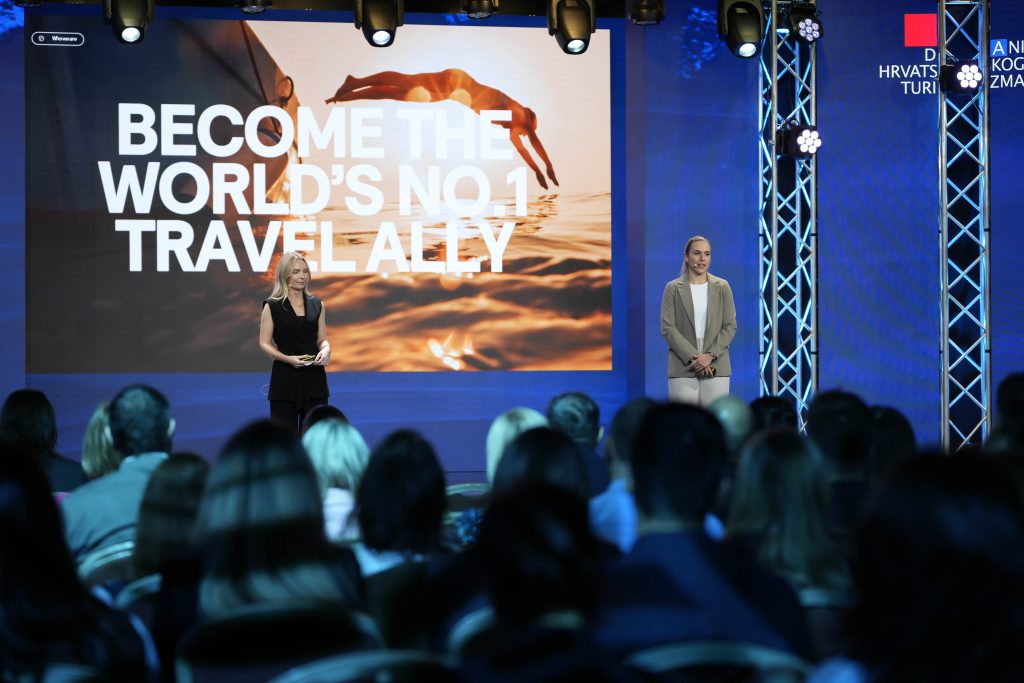
How travelers are changing, how many people are exploring Croatia, and what changing trends in the travel industry mean for our country’s position in the tourism environment are the main questions answered by a lecture by Skyscanner Commercial Manager Chelsea Tessendorf and Skyscanner Senior Commercial Manager Lisa Brown, held as part of the Croatian Tourism Days in Dubrovnik.
Analysis of Skyscanner, the world-famous search engine for offers from different airlines and travel agencies, shows that Croatia continues to achieve excellent results in key European markets. A brand has been built that is easily recognizable – authentic and reliable, the representatives of Skyscanner emphasized.
Over the past 12 months, the largest percentage increases in interest and demand for Croatia through Skyscanner’s platform have come from Poland, Finland, Belgium, Greece and the Czech Republic. These are strong, fast-growing markets where Croatia’s visibility is rapidly increasing — and worthy of closer strategic focus going forward, Tessendorf and Brown noted.
Po ukupnom broju pretraga na platformi Skyscannera tijekom posljednjih 12 mjeseci, Ujedinjena Kraljevina prednjači s 13,4 milijuna pretraga, slijedi Njemačka s 12,4 milijuna, potom su tu Poljska, Italija i Španjolska. Dakle, iako interes za Hrvatskom raste na novijim tržištima, tradicionalna jezgra — Ujedinjena Kraljevina i Njemačka — i dalje predstavlja okosnicu dolazne potražnje.
Globally, the most searched cities in Croatia are Split, Dubrovnik, Zagreb, Zadar and Pula. Growth is particularly strong in
Commenting on the key characteristics of our country and the circumstances in which Croatia finds itself, while also comparing it to major competitors such as Turkey, Portugal, Greece, Spain and Italy, Tessendorf and Brown agreed that Croatia has the opportunity to position itself as a premium Mediterranean destination with unique local experiences, which will be key to attracting travelers in the future.
As particularly interesting trends that will mark 2026 , but also the future of tourism and travel, Tessendorf and Brown first cite the booming beauty industry, which means that we will often see travelers searching for exclusive products in stores that they cannot find in their own country, those waiting in lines at French pharmacies, and those who will go abroad for special face and body treatments. In other words, a visit to a local beauty store will become as important a part of a trip as a visit to a landmark or museum.
Furthermore, family travel has always been important, but in 2026 it will take on a new dimension. There is a strong increase in multi-generational travel – parents, children and grandparents are increasingly travelling together. In addition, a growing number of travellers are heading to higher altitudes. 71% of travellers are considering a mountain getaway or planning one for the summer or autumn of 2026, according to Skyscanner data.
Then there is the growth of trips designed around literature – whether it’s visiting destinations inspired by literary works, exploring beautiful libraries, or going on reading retreats. Also, travel itself is no longer just an escape from routine, but is becoming a real platform for connecting with people.
The change is also visible in the perception of accommodation. Younger travelers in particular are choosing
Going to supermarkets is another trend that tourists are very fond of on their travels, as they don’t just go to the store for basic necessities, but to get to know the local culture. So, food discovery is no longer just limited to restaurants – it’s now happening in the snack section too.
Additionally, there is a growing trend of travelers looking for something outside the usual attractions — choosing lesser-known destinations that often fly under the radar. They are looking for places that feel authentic, offer unique experiences and provide real value, instead of overcrowded, popular tourist locations. This category includes cities such as Rijeka, Bilbao, Kochi, Salerno and others.
Last but not least, travelers are increasingly designing trips that align with their personalities and what they love. With the cost of living being an extremely important aspect of each of us, trips in 2026 are planned with intention and with an emphasis on personal priorities, interests, and feelings of “is it worth it?”.
Source: HTZ