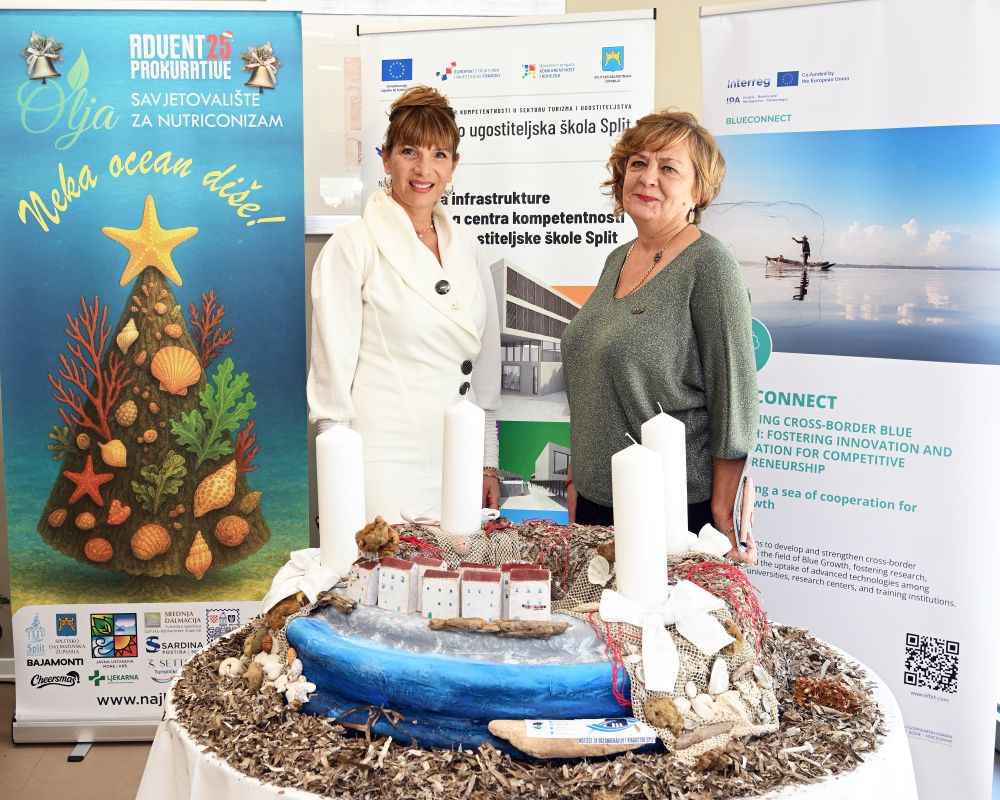
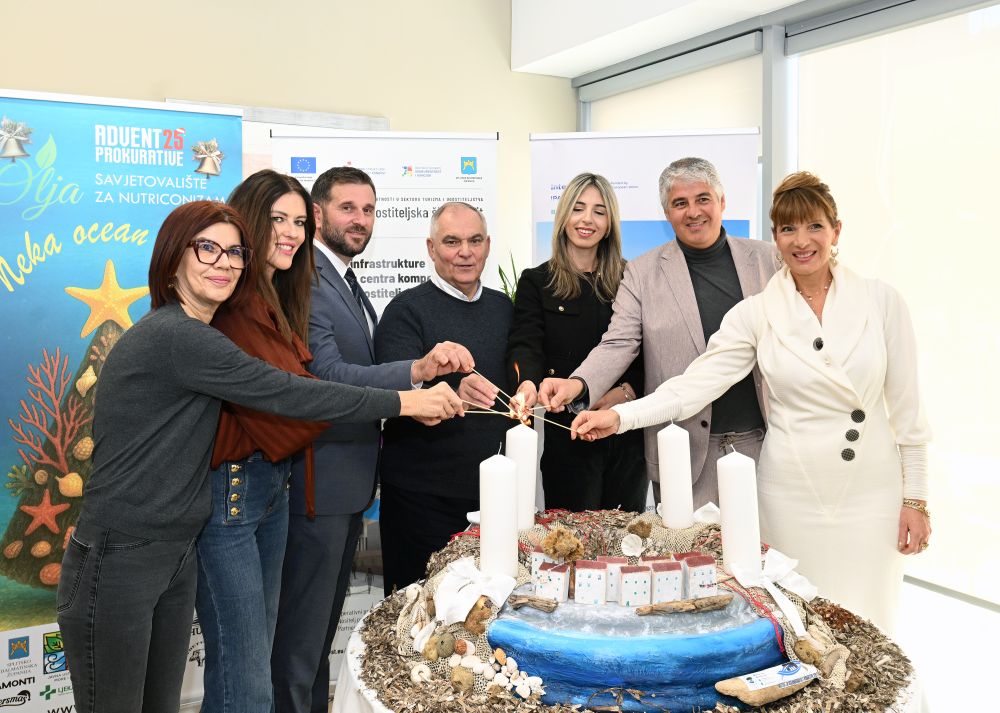
Under the motto ‘Let the ocean breathe’, the newly opened Akademis restaurant at the Split Tourism and Hospitality School kicked off Gastroadvent on Sunday, for the 16th year in a row, led by nutritionist and dietician Olja Martinić. The first, a candle of hope, was lit by Split print media journalists.
Croatian Association of Private Shipowners Gold Partner
This year, the event was supported again by the Tourist Board of the City of Split, Split-Dalmatia County, the Tourist Board of the Split-Dalmatia County, the Public Institution More i krš, Sardina d.o.o. Postira, the Institute of Oceanography and Fisheries in Split. The gold partner is the Croatian Association of Private Shipowners (HUPB). Partners are Adriatic Queen, Carlsberg Croatia, Ljekarne SDŽ, and Enosophia Winery.
‘Motivated by the 3rd UN Conference in Nice and the European Ocean Pact, which aim to restore the health of the seas and oceans, we placed posidonia, algae and seafood at the center of our gathering.
The sea nourishes us and top-notch gastronomy is unthinkable without the food it provides. However, the role of seafood in dietetics is more valuable due to the nutritional richness and high bioavailability of seafood dishes,’ emphasizes the author of the project.
If we know that they contain omega fatty acids, little fat, and sufficient amounts of zinc, selenium, iodine, iron, and numerous micronutrients important for human health, we must allow the ocean to breathe – so that humanity can thrive.
Posidonia, algae and seafood
‘I am extremely happy that the sea is at the center of our attention. It is a treasure trove for all of us who work in dietetics, or rather, for those of us who design menus for people with compromised health. We will explain on several occasions this month the benefits of all seafood, especially when it comes to autoimmune diseases that are currently on the rise. We still do not have a developed algae cultivation. In the world, in economic terms, this is very important. We hope to encourage such projects. Most of you will be tasting linguine for the first time. Since our chef Ivica Katić has been preparing them for years, you can trust what he has prepared,’ said the author of the project, Olja Martinić.
‘Let’s preserve what we need to leave to our future generations. We only borrowed this for a short time. Let’s exchange our new knowledge and experiences related to marine conservation again, and our Štorija o’ spize, which this year had the theme of preserving our sea and coastline, is proof that we have already started, because this is something we are building on, not only our tourism, but also our future. Posidonia is the foundation of biodiversity in the Mediterranean,’ emphasized Alijana Vukšić, director of the Split Tourist Board.
Posidonia produces a huge amount of oxygen. Its meadows are also a breeding ground, a feeding ground, and a shelter for hundreds of species of fish and other marine organisms. It is also essential for filtering and for the clarity and purity of the Adriatic Sea.
“It is the guardian of the beaches. With its leaves, it prevents the overly aggressive action of waves, and with its roots it stabilizes sediment and prevents soil erosion. Therefore, if we want our sea to be transparent, rich in fish, and our beaches to be naturally preserved, let’s protect the posidonia,” said the director of the Public Institution Sea and Karst, Domagoj Lažeta.


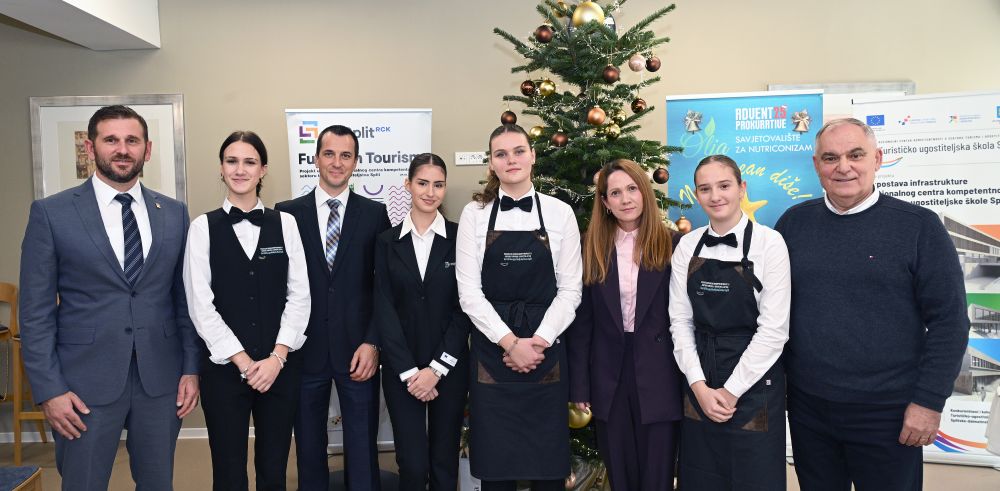
The Tourism and Hospitality School became a Competence Center in March
‘Our building has 16 modernly equipped classrooms for the education of children and adults in tourism and hospitality. We have 19 sleeping units, reception services, and catering facilities. All our students have the opportunity to see first-hand what awaits them in the future, all through work-based learning,’ said Toni Miloš from the Split Hospitality and Tourism School.
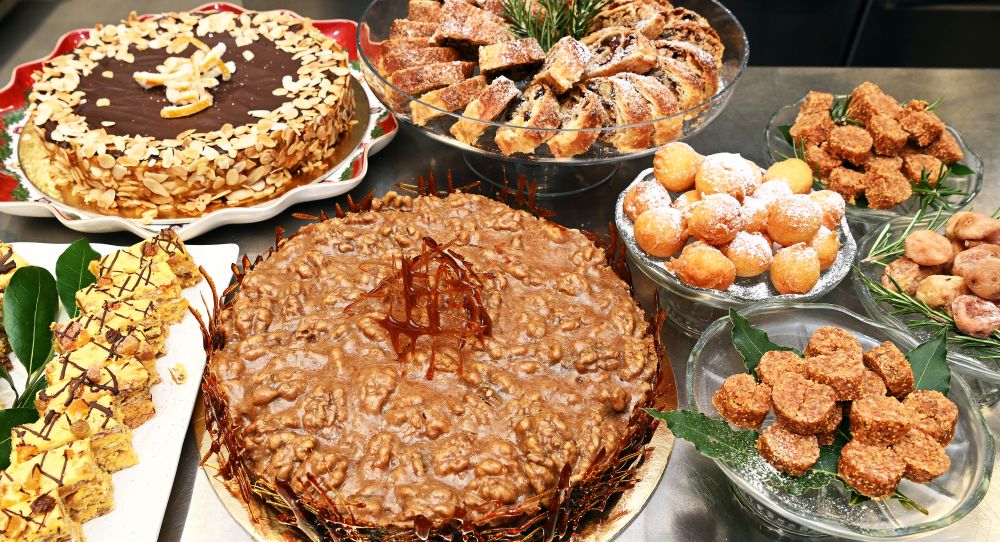
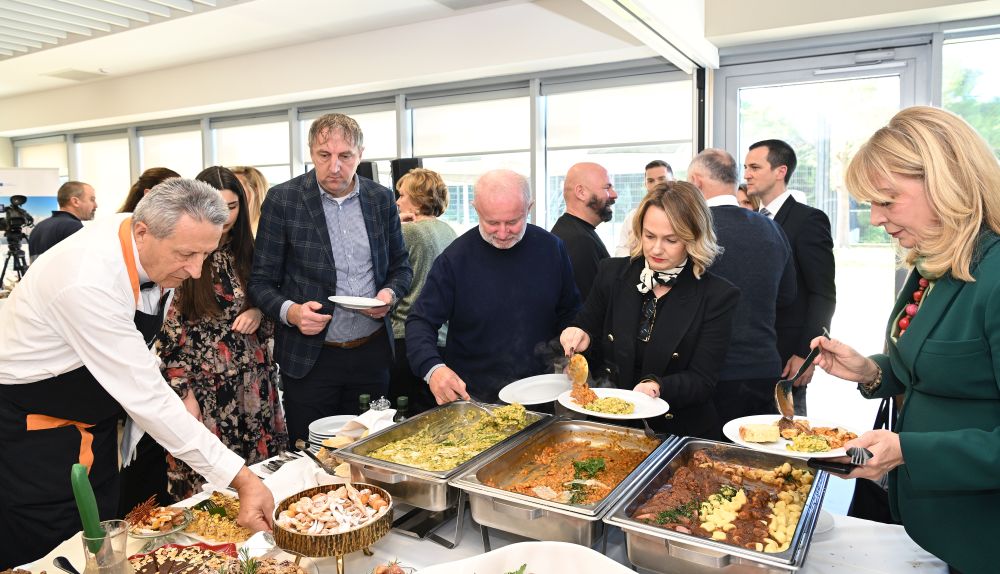
Chef Ivica Katić was in charge of the food, and the students prepared the dishes. He was very pleased with their enthusiasm and skill. Among other things, risotto with fescue was served.
‘A smoked tuna salad awaits you on the table, which we have slightly modified, made in our own way. The octopus salad is classic, but we added chickpeas. And among the warmer dishes, there is tuna ala pašticada and orzo with smoked seafood,’ added chef Katić.
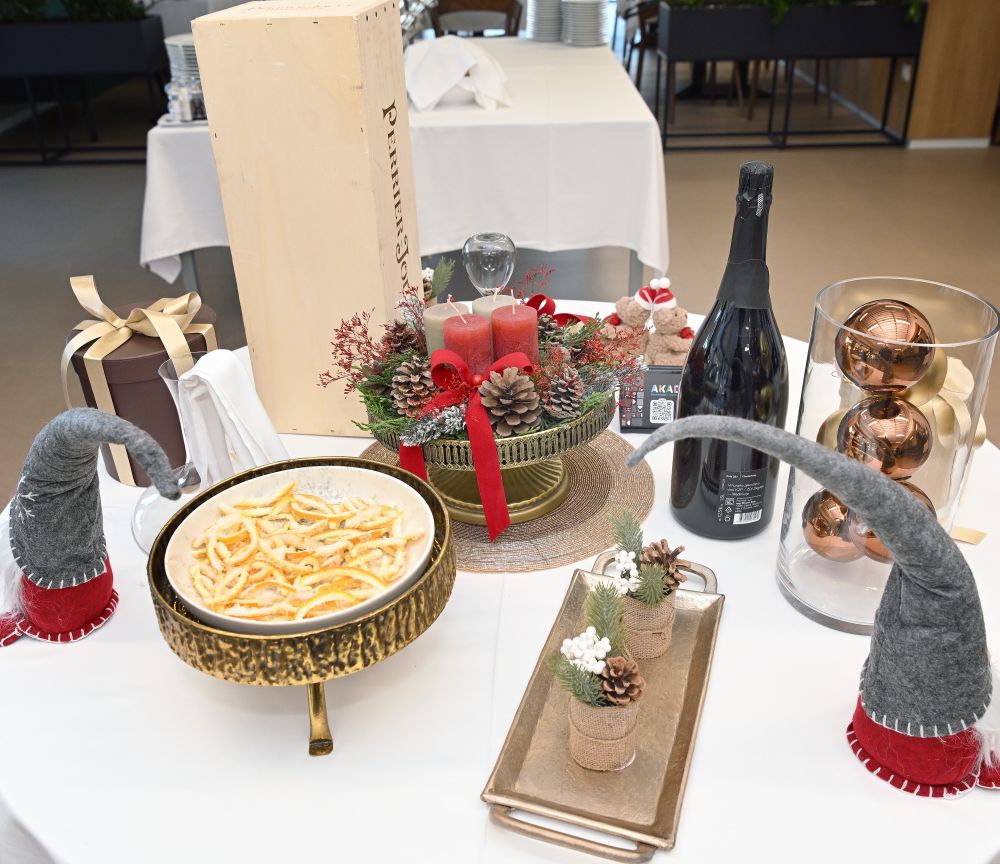

The owner of the winery, Tihomir Kota, presented his sparkling wines: Kota 267, Kota 325, Kota 225 and Kota 265 (rose), and the still wine Kota 267.
“I would go so far as to say that sparkling wines, especially at this time of year, and of course also on warmer days, go exceptionally well with Mediterranean seafood delicacies. Sparkling wines are by category fresh wines, with lower alcohol values, so they go exceptionally well with light seafood delicacies,” emphasized Kota, whose wines were served with all of these delicacies.
Institute of Oceanography and Fisheries
The institution that organizes this year’s Gastroadvent is already 95 years old. It is about the Institute of Oceanography and Fisheries from Split.
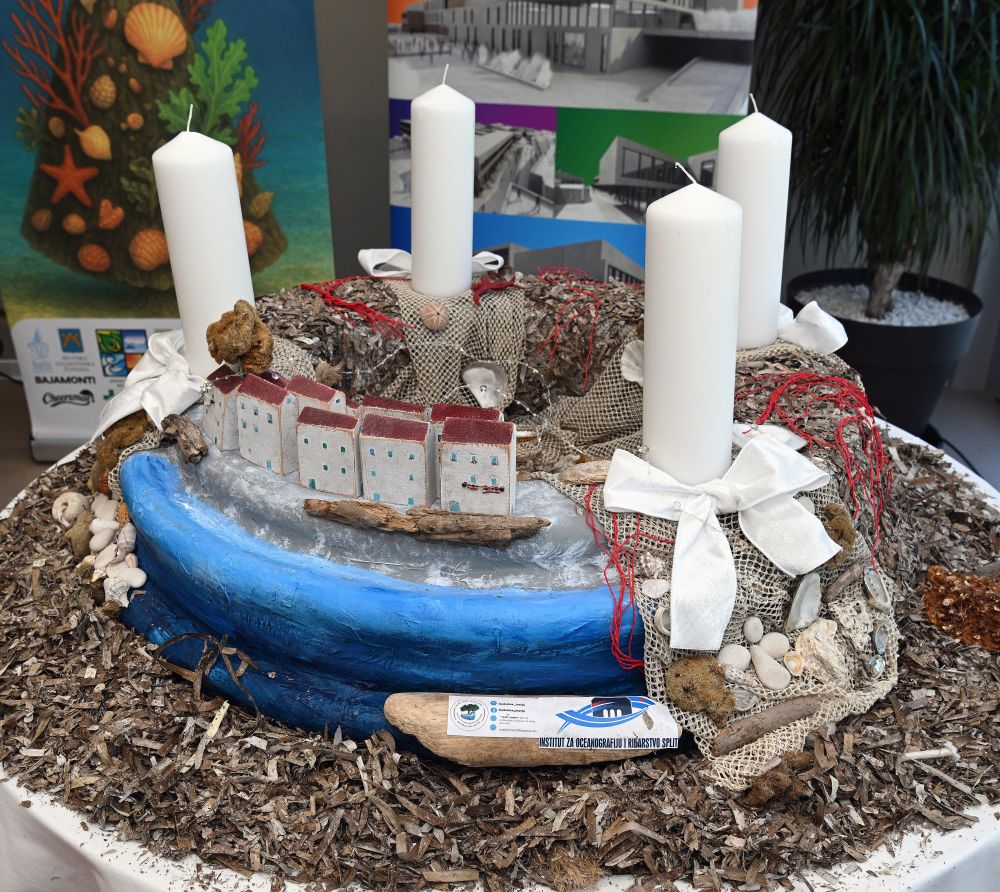
‘Our wish was to highlight the importance, not only of seagrass, but also of protecting the entire marine ecosystem, and thus lean on our maritime tradition and fishing. Let’s continue fishing so that it can be sustained. On this occasion, I really had to thank Ms. Karmelić, who wholeheartedly accepted to make a wreath of marine elements,’ said Barbara Zorica from the Institute of Oceanography and Fisheries.
“The challenge was precisely because of the posidonia, which you know what it is like when it’s dry. Among other materials, I used sponges, shells thrown up by the sea, and sea urchins that my husband brings me. Like this, cleaned, when an octopus eats it from its dives, so I have to thank him for putting up with me and for his lunch being late on weekends when inspiration takes me,” said modestly the author of this year’s Gastro Advent wreath, Katija Karmelić.

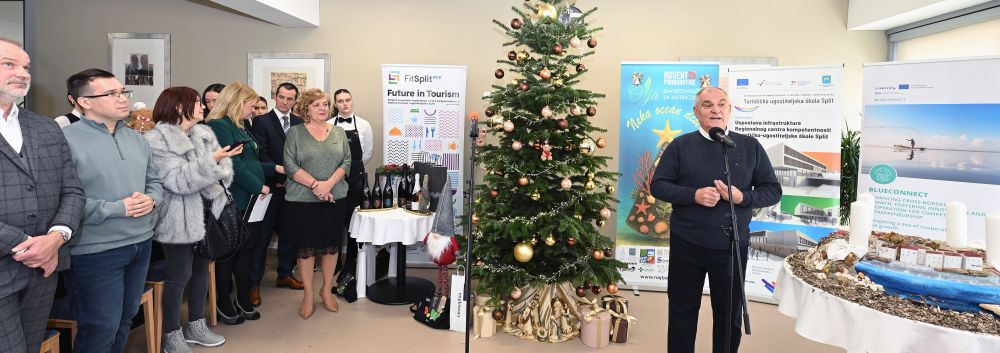
’15 degrees, sea, sun and we invite everyone from the continent that has lower temperatures to enjoy this magic. This is exactly how the Advent of the city of Split, of our entire Dalmatia, was promoted and our goal is precisely to show that we are different in this way,’ emphasized Split Mayor Tomislav Šuta.
Marine conservation is essential
‘Almost one third of the Adriatic coast is managed by the Split-Dalmatia County. The indentation of the coast of the Split-Dalmatia County is such that if we turned it into a single road, we could reach Frankfurt by car. The coast is so indented only in the area of our Split-Dalmatia County. The majority of our residents, whether sailors, fishermen or tourism workers, live off that sea. Its preservation is important. The Gastroadvent that Olja has been persistently pushing for 16 years has contributed to our dear Ivana Vladović, director of the Split-Dalmatia County Tourist Board, receiving a transitional charter in Barcelona that in 2027 the Split-Dalmatia County, after Tuscany and Catalonia, will become a gastroregion of Europe. This is one of the most important tourism awards in Europe in the tourism segment,’ emphasized County Prefect Blaženko Boban.
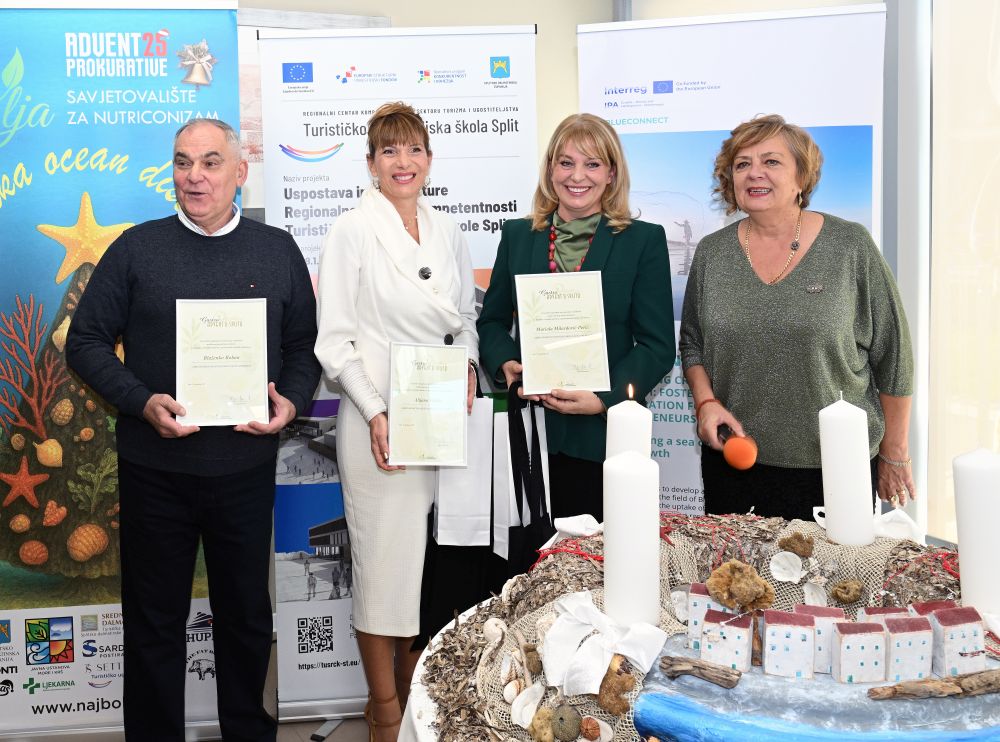
As part of this year’s Gastroadvent, the ‘Ambassador of the Mediterranean Diet’ awards were also presented. They went to County Prefect Boban, Director of the Split Tourist Board Alijana Vukšić, and HRT editor and journalist Marijola Milardović Perić.
Source: Dalmatinski portal Photo: Jadran Babić