Source: Poslovni dnevnik
The director of the Croatian Tourist Board points out that we are no longer talking about the tourist season, but rather the year.
I have spoken to tourism insiders on various occasions several times throughout the year. For example, when we spoke on Rab in June, there was a lot of caution when forecasting this year’s tourism results. But even then, we had information from various parts of Croatia, but also from various segments of key source markets for Croatia, that the numbers should look good. Later, we “established the material” because the numbers confirmed these initial indications. In the autumn, statistics confirmed the fulfillment of the plans set by domestic tourism strategists.
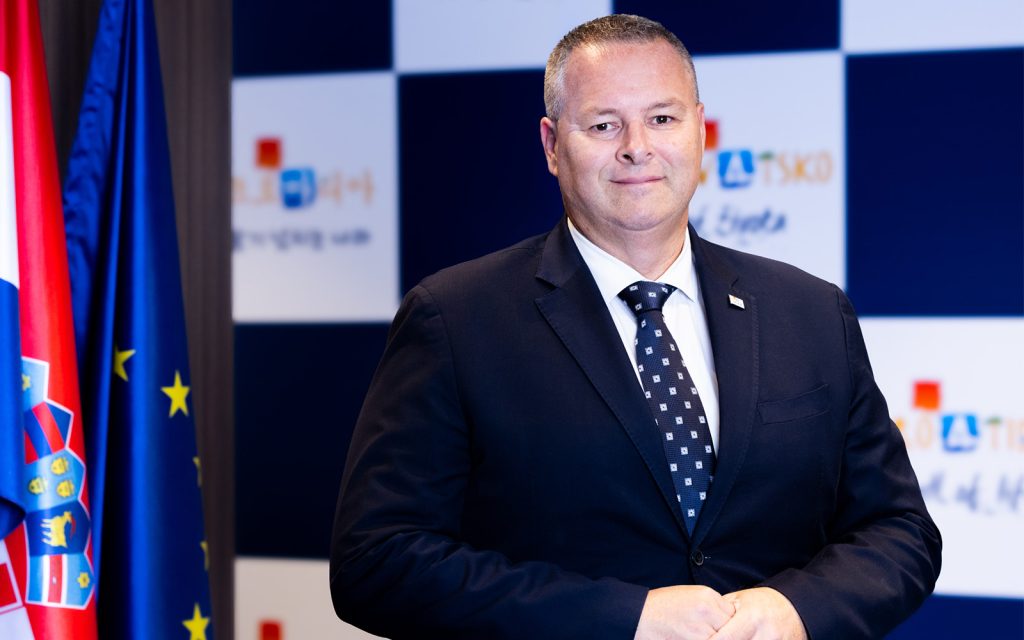
The maximum relief in July and August goes hand in hand with the growth of tourism in the rest of the year. No significant growth was recorded during the very heart of the season in July and August. It is obvious that the tourist season is expanding to cover most of the year. Croatia is becoming a year-round destination. With price challenges still present, especially in the hospitality sector, the end of the year brought satisfaction with what has been done. We talk about all this with Kristijan Staničić, director of the Croatian National Tourist Board.
How would you rate this year’s tourist season?
I would like to move away from the term “season” and talk about the tourist year. During the first 11 months of the year, we achieved 21.4 million arrivals and 109 million overnight stays in our country, which is a two percent increase in arrivals and one percent in overnight stays compared to the same period last year. It should be noted that the aforementioned growth was generated outside the main summer months, which is confirmation that Croatia is increasingly positioning itself as an attractive and year-round destination on the global market, but also that there are certain trends in the market according to which tourists are increasingly choosing periods and destinations with a more pleasant climate, fewer crowds, lower prices, etc. It is also important to emphasize that the positive trends in tourist traffic are also followed by financial indicators – for example, the Croatian National Bank’s data on income from foreign tourists indicate that 4.375 billion euros in income was generated in the first six months of this year, which is a 5.9 percent increase compared to the same period last year. Therefore, all indicators indicate that Croatia is nearing the end of another successful tourist year.
This year’s postseason is well on its way to surpassing last year’s, which was a record. What do you consider the key to an even better positioning in the months after the central tourist season?
We base the even stronger positioning of Croatia and our overall tourist offer after the main summer months on a strategic focus on products that have the greatest potential in the off-season, such as active holidays, wine and gastronomy, cultural and health tourism, nautical tourism, city break travel, etc. I consider the key to be continuous work on the dispersion of tourist traffic, strengthening authentic experiences and promoting unsung destinations that offer the best balance of quality, experience and price in the off-season. Strong cooperation with airlines and tour operators also plays an important role, as well as targeted campaigns in important source markets for us.
Is Croatia on its way to ‘overcoming’ seasonality and becoming a year-round destination?
In Croatian tourism, we have already taken a number of concrete measures and activities that have enabled our country to be perceived by the market as an attractive year-round destination. Although the summer part of the year is still the most intense in terms of tourist traffic, data from recent years clearly indicate a growth in traffic in the pre- and post-season, but also a generally growing interest in traveling throughout the year. We continue to work in this direction, especially through the development of selective forms of tourism that naturally generate demand throughout the year. We are also working in parallel to strengthen transport connections, promote continental destinations and create content that offers an authentic experience. The goal is not to completely eliminate seasonality, which is in a certain sense natural when we talk about Mediterranean destinations, but we want to manage it more systematically and gradually reduce it, primarily through further increasing quality, providing value for money, but also through the sustainability of tourism.
The British market is one of the ones with the greatest potential for Croatian tourism. You were recently at WTM in London. What are the announcements from the British market for next year?
We present Croatia on this market as a high-quality and safe destination that offers a good price-quality ratio, but also as an authentic and year-round destination, while among the comparative advantages of our country we highlight the fact that we are just over two hours away from the UK, that we have a number of destinations, but also experiences that the British have yet to discover. For example, during WTM we placed special emphasis on the promotion of eno-gastronomy, we organized a tasting of top Croatian wines, cheeses and other products, while Croatian chefs Rudolf Štefan and Ante Udovičić held a presentation and demonstration of the preparation of dishes from Croatian indigenous ingredients. I must also highlight the signed Cooperation Agreement between the Croatian Tourist Board and the Jet2 Group. That our country is recognized in this market as a high-quality destination that provides value for money is also shown by a survey by the British Association of Travel Agents, according to which Croatia is in the top 15 markets that the British want to visit in 2026. Therefore, in 2026, we expect positive trends from this important market to continue.
In this context, how important is the memorandum signed with Jet2?
It is a group under which Jet2.com operates as the third largest airline in the UK and Jet2Holidays as one of the leading British tour operators offering package deals for the entire Mediterranean. During this year, they had active flights from eight UK destinations to Split, Dubrovnik and Pula, and for next year they are announcing an increase in the number of routes to Croatian destinations. As I already mentioned, the results from that market mostly depend on high-quality transport connections by air, so we pay the most attention to that segment when it comes to the UK market. Collaborations and agreements like this can only help us achieve even better results from the UK market.
Of the more distant markets, America is also very important to us. In that sense, how important is the fact that United Airlines will be flying to Split next year, in addition to Dubrovnik?
The fact that United Airlines will have a direct route to Split next year, in addition to Dubrovnik, is excellent news for the entire Croatian tourism sector. Namely, this is our most important long-distance market from which we generate the largest tourist traffic, and we have a continuous growth in arrivals and overnight stays of Americans, throughout the year. In addition, we must not forget that Americans are also our best consumers when it comes to daily spending by all tourists. They look for quality of offer, they want to discover new destinations and places, get to know the culture of the destination they are staying in, and they also choose high-quality accommodation.
You also recently visited China, where you discussed with Chinese officials possible flights from China to Croatia. Are there any developments there and how important is the Chinese market to us?
During our stay in China, we met with representatives of Chinese airlines Air China and Hainan Airlines, with whom we discussed the potential of the Chinese market, the growing interest of Chinese tourists in Croatia, and the importance of airlines for the further growth of tourist traffic between Croatia and China. We all know that China is a large market with enormous potential; over the past few years, we have been recording an increase in tourist traffic from that country, but it will take us some time to fully return to the level of traffic from 2019. Namely, the Chinese market, like all Far Eastern markets in general, was significantly affected by the negative consequences of the pandemic. Travel restrictions have left their mark, so the return to normal is somewhat slower. In addition, there is a noticeable trend of travel within our own country and to neighboring countries in that market. We will see what the future brings, we should be optimistic and do everything in our power to connect Croatia and China with a direct airline.
From the promotion plan for next year, what else can you highlight?
In the promotion plan for 2026, we are emphasizing further strengthening Croatia’s recognition as a sustainable, high-quality, year-round destination. We will invest in particular in digital campaigns in key emitting markets, the production of new creative content, and stronger targeting of certain segments that are important to us, such as outdoor, nautical, wine and gastronomy, culture, etc. We are also continuing to intensify cooperation with global carriers, leading tour operators, and platforms, in order to further strengthen the accessibility and visibility of Croatia throughout the year. A major focus will also be on the promotion of continental tourism, as well as on positioning Croatia within trends that are increasingly important to travelers – authenticity, sustainability, local experience, personalized offers, and safety. All of the above contributes to the goal of Croatia maintaining its competitiveness and putting quality ahead of quantity.
Another Croatian Tourism Days is behind us. What was the most talked about? What messages are most important to you, and what did we hear at DHT?
This year’s Croatian Tourism Days once again confirmed that Croatian tourism is in a phase of important breakthroughs, and the key topics most discussed were sustainability, digital transformation and raising the overall value of the tourism product. The need for further destination management, thoughtful development and strengthening cooperation between all stakeholders was emphasized – from the national level to local communities. For us, the message is extremely important that Croatia today has all the prerequisites for an even stronger positioning as a year-round destination, but also that it is necessary to continue investing in tourism infrastructure, human resources and digital tools. It was also emphasized that the pre-season and post-season are getting stronger, which confirms that the strategy focused on quality and traffic dispersion is yielding results. The fact that the tourism sector shares a common vision – to attract guests with greater purchasing power, offer authentic experiences and at the same time preserve the space, resources and identity of our destinations is also encouraging. One of the key messages is certainly that we must offer guests appropriate value for money.
How important is the role of investments in tourism infrastructure and additional facilities in ensuring that the offer is comprehensive and competitive throughout the year?
Investments in tourism infrastructure and additional facilities are one of the key prerequisites for the competitiveness of Croatian tourism, especially in the context of the goal of Croatia becoming a year-round high-value destination. Modern travelers increasingly expect top-notch service, a variety of experiences and additional reasons to come, and it is precisely investments in accommodation capacities, wellness and sports facilities, cultural and outdoor infrastructure and thematic attractions that enable destinations to attract guests outside the summer months. Such investments not only extend the main part of the tourist year, but also increase the overall value of the stay, strengthen the recognizability of destinations and encourage the sustainable development of local communities. Therefore, the CNTB strongly supports investments that contribute to raising quality, diversifying the offer and creating authentic experiences that make us competitive throughout the year.
For the first time since statistics have been tracked, Croatia is recording a decline in the number of beds in family accommodation. How significant is this?
After a long period, Croatia is recording a decline in the number of beds in family accommodation, which we consider an important, but also expected step towards more sustainable management of this accommodation segment, especially when we know that the Government of the Republic of Croatia and the competent ministry have adopted certain laws and regulations that go exactly in that direction, with the aim of raising quality and sustainability. For years, we have witnessed strong growth in private accommodation, and now we are seeing the first balancing that can contribute to higher quality of supply, better spatial organization and a greater focus on sustainable growth, and not only on growth in quantity.
Has Croatia, at least for some of our traditional guests, become too expensive a destination?
Prices have been a frequent topic across Europe this year, not just in Croatia. It is important to point out that overall tourist traffic, but also the revenues generated, indicate that we remain a competitive destination, especially in our most important source markets. Signals from individual markets warn us that price is extremely important when choosing a destination. Some guests are certainly more sensitive to price changes, but we are also seeing an increase in the segment of guests who are looking for higher quality and are ready to spend more when they get the right value. Croatia has long since ceased to be a “low-cost” destination, but a country with a diverse offer – from affordable options to top-notch premium products. The key for us is to maintain balance, that is, to strengthen quality, invest in infrastructure and facilities, and ensure that guests in every segment get value for their money.
You often emphasize that Croatia must remain focused on authenticity as its greatest strength. Why do you think that?
Authenticity is one of the greatest values of Croatian tourism, but also a part of the offer that is in high demand on the global market today. At a time when many destinations are becoming similar and difficult to recognize, what can further set Croatia apart is our way of life, tradition, local gastronomy, natural diversity and sincere hospitality that cannot be copied. Global trends clearly show that travelers are increasingly looking for experiences that are real, local and connected to the identity of the destination. This is precisely why we believe that preserving and promoting authenticity is crucial – not only for competitiveness, but also for the sustainable development of our tourism offer. There are many beautiful and attractive destinations in the world, and that is why Croatia must be unique in what it offers. Authenticity is what gives Croatia its recognition, shows our story and builds an emotional connection with guests, and that is the greatest value a destination can offer today.