Source: metro-portal.hr
Find out how eco-friendly anchorages protect the Adriatic Sea from anchor damage. Discover the benefits of sustainable nautical tourism and the preservation of *Posidonia* seagrass.
When the average boater drops anchor in a secluded cove, they rarely think about what is happening beneath the surface. The heavy metal anchor and tens of meters of chain scraping along the seabed act like a plow in a field. The greatest casualty of this process is *Posidonia oceanica*, a strictly protected seagrass known as the “lungs of the Mediterranean.”
These seagrass meadows produce vast amounts of oxygen, purify the sea, and provide a refuge for hundreds of marine species. When an anchor chain tears up a *Posidonia* meadow, the damage is irreversible because the plant takes centuries to recover. With the loss of *Posidonia*, we lose biodiversity, the sea loses its clarity, and beaches are left without natural protection against erosion and waves.
What are eco-friendly anchorages and how do they work?
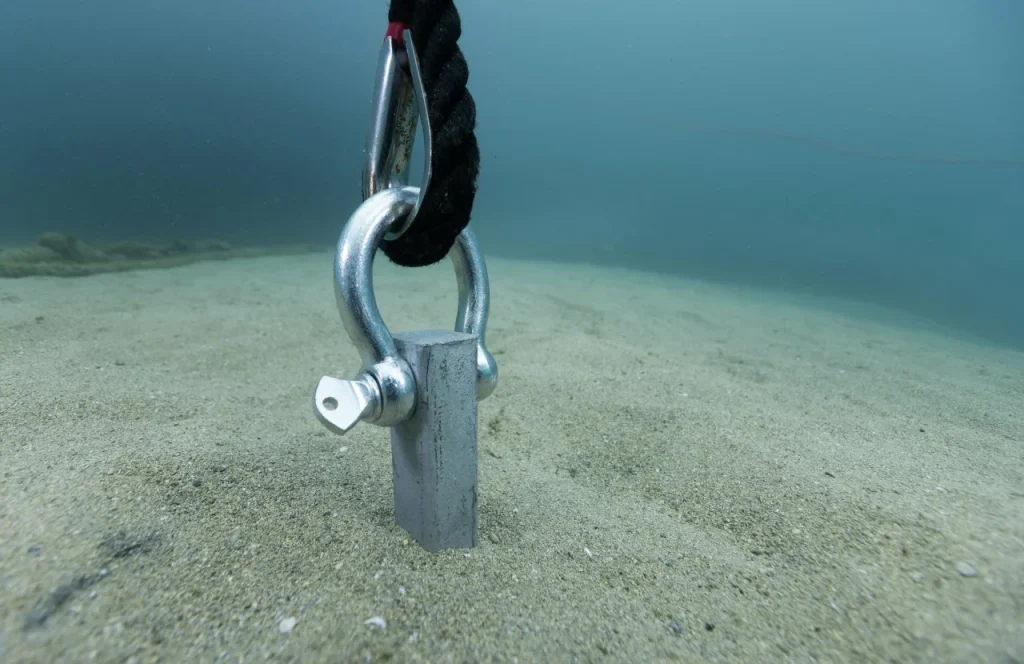
Eco-friendly moorings represent a modern and sustainable alternative to traditional anchoring. Instead of massive concrete blocks that are lowered to the seabed and crush organisms, eco-friendly systems utilize so-called “driven anchors” (such as Manta Ray or helix systems).
These anchors are screwed directly into the seabed without damaging the surrounding sediment. An elastic line that floats above the bottom is attached to them, ensuring the chain never touches the seagrass. Boaters simply moor to the installed buoy, eliminating the need to drop their own anchor.
Multiple benefits: safety for boaters and profit for the local community
The introduction of eco-friendly moorings brings a threefold benefit: to nature, to boaters, and to the local economy.
- Maximum safety: eco-friendly buoys tested against extreme weather conditions. Boaters can sleep soundly knowing their anchor won’t give way during a summer storm.
- Sustainable resource management: through a concession system, local communities can control the number of vessels in bays, preventing overcrowding and ecological collapse.
- Financial self-sustainability: charging for ecological moorings creates a stable source of income that can be invested in further cleaning of the sea and improvement of local infrastructure.
The Green Shift as a Key Brand of Croatian Tourism
Modern travelers no longer seek only sun and sea; they look for eco-conscious destinations. Nautical tourism in the Adriatic cannot grow in the long term if it destroys the very resource upon which it depends. By implementing a network of eco-friendly anchorages along the coast and islands, Croatia sends a clear message that it is actively protecting its greatest treasure.
The time for half-measures has passed. To preserve the blue Adriatic for future generations, eco-friendly anchorages must become the standard, not the exception. Preserving the seabed is not merely an environmental obligation; it is the smartest economic investment in the future of Croatian tourism.