Source: financije.hr Author: Igor Ilić
There is no need to recall how strong an industrial sector Croatian shipbuilding was in the past, nor how painful it was to carry out the restructuring of that sector—a process that served as one of the key conditions for joining the European Union (EU).
The current situation is a completely different story, and a thorough analysis of the shipbuilding sector—in Europe and globally, as well as in Croatia—has been conducted by Goran Buturac, an expert at the Institute of Economics, Zagreb (EIZ).
European shipbuilding is undergoing a profound transformation driven by the Fourth Industrial Revolution, successfully dispelling the myth that the sector is destined to disappear entirely from Europe. While shipyards in Asian nations—namely China, South Korea, and Japan—have taken over the mass, serial production of large cargo vessels and tankers, the EU has established itself as a global technological leader in the construction of cruise ships and luxury yachts.
Today, there are approximately 150 large and over 300 smaller shipyards actively operating within the EU, employing more than 300,000 workers and generating an annual turnover exceeding 80 billion euros. Despite fragmentation and relatively small production capacities—which, for the time being, do not yield significant multiplier effects on other sectors or the economy as a whole—the growth in activity among leading Croatian shipbuilding companies is encouraging for the future development of this industry in Croatia. “, assesses Buturac.
He emphasizes that this is an activity that produces an extremely complex product, the production of which includes a wide range of goods, from natural resources, intermediate products, semi-finished products to finished products.
“An industry traditionally slow and conservative is currently undergoing a transformation, driven by machine learning and advanced algorithms that enable drastically faster design processes, predictive maintenance, and a move toward fully autonomous vessels. The application of artificial intelligence (AI) in shipbuilding is significant because it revolutionizes design efficiency, navigational safety, production optimization, and the sustainability of the maritime industry,” adds Buturac.
Read more on financije.hr!
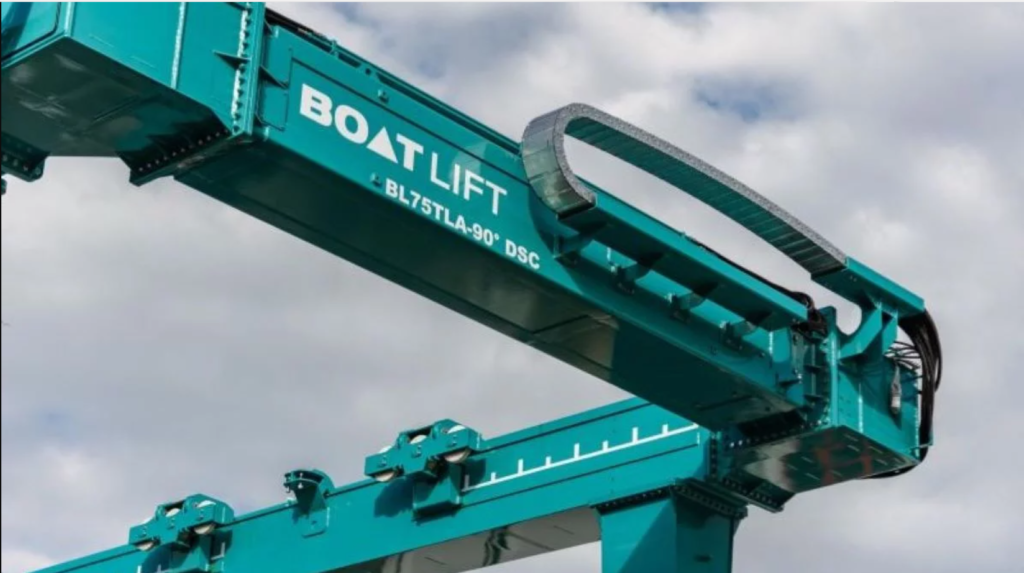
Photo: Iskra Brodogradilište Šibenik/LinkedIn